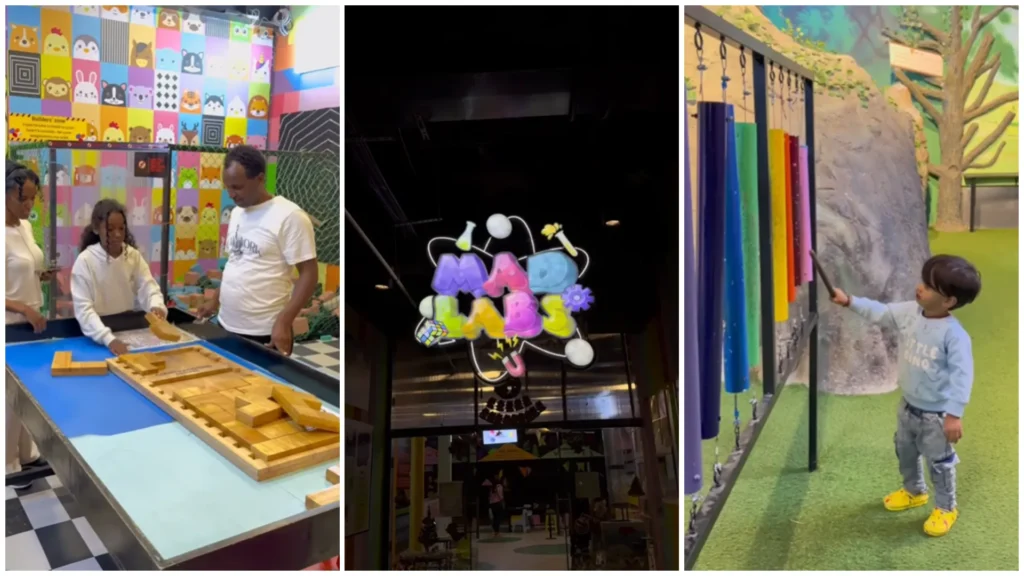
MadLabs Pre-Loader-5

Educational Learning Games

Educational Learning Games

Brain-Building Educational Learning Games Kids Bangalore

Why Educational Learning Games Matter More Than Ever Educational learning games are rapidly transforming how children develop core skills – but parents are often unsure where to begin. With thousands of apps, toys, and online programs claiming to be “educational,” it’s hard to know which educational learning games truly build understanding and which simply entertain. Parents frequently ask: Are screen-based apps enough? Do hands-on games justify the cost? Are learning games actually age-appropriate, or just marketed well? These questions become even more important during early childhood, when curiosity, attention span, and cognitive foundations are still forming. Research consistently shows that educational learning games work best when children can touch, build, test, and explore – not just swipe a screen. Physical interaction activates multiple parts of the brain, leading to deeper comprehension and longer retention. That’s why families in Bangalore are increasingly turning to experiential learning spaces like MAD Labs, located inside Snow City on Jayamahal Main Road. Designed by IISc PhD scientists, MAD Labs offers structured, hands-on learning games that feel like play – but deliver real developmental outcomes. This guide breaks down how educational learning games work, which age groups benefit most, and why hands-on STEM-based play is one of the smartest investments parents and schools can make. Best Educational Learning Games for Kids Aged 5–8 The ages of 5 to 8 represent a critical developmental window. During this stage, children rapidly build language skills, logical reasoning, motor coordination, and curiosity-driven learning habits. Choosing the best educational learning games for kids aged 5-8 means matching play to these milestones. Key Cognitive Skills Developing at This Age Learning Games at MAD Labs for Ages 5–8 These learning games are designed to be open-ended – allowing children to explore at their own pace while still meeting clear learning objectives. STEM Learning Games for Elementary School – Grades 1–5 As children enter elementary school, learning shifts from basic discovery to concept-building. STEM learning games for elementary school work best when they translate abstract ideas into tangible experiences. Why STEM-Based Games Matter STEM-focused games help children: STEM Zones at MAD Labs That Function as Games Rather than instructions or lectures, these STEM learning games rely on experimentation – children learn by doing, adjusting, and discovering patterns themselves. Hands-On Learning Games for Classroom – Teacher Approved Schools increasingly recognize the value of hands-on learning games for classroom enrichment. These games support group learning, reinforce curriculum concepts, and encourage collaboration. Why Teachers Prefer Hands-On Learning Hands-on learning games: How MAD Labs Supports Classroom Integration More than 50+ Bangalore schools use MAD Labs as a supplemental learning destination – integrating experiential games with classroom teaching. Science Learning Games with Experiments – Real Results True understanding in science comes from experimentation. Science learning games with experiments allow children to test hypotheses, observe outcomes, and revise thinking. What Kids Actually Do at MAD Labs Safety & Outcomes Parents consistently report that children remember these experiences long after the visit – and often recreate experiments at home. Why Educational Learning Games Beat Screen Time While digital apps are convenient, research shows that interactive learning games with physical engagement deliver far greater developmental benefits. Hands-On Games vs Screen Apps Aspect Hands-On Learning Games Screen-Based Apps Retention High (multi-sensory) Low to moderate Engagement Active Passive Motor Skills Strong development Minimal Social Learning Encouraged Limited Educational learning games that involve movement, touch, and collaboration support long-term skill development and healthier learning habits. Frequently Asked Questions1. What are the best educational learning games for kids aged 5-8?Hands-on games that combine sensory play, problem-solving, and exploration – like those at MAD Labs – work best for this age.2. Where can I find STEM learning games for elementary school?MAD Labs in Bangalore offers multiple STEM-based interactive learning zones for Grades 1–5.3. Are there hands-on learning games for classroom use?Yes. Many schools use MAD Labs learning games as part of curriculum enrichment and field trips.4. How do science learning games benefit children?They build scientific thinking through experimentation, observation, and cause-and-effect learning.5. What’s the difference between educational games and apps?Educational games involve physical interaction and deeper engagement, while apps are mostly passive.6. Can educational learning games align with school curriculum?Yes. MAD Labs designs its learning games to align with CBSE and ICSE curricula. Choosing the Right Educational Learning Games The most effective educational learning games combine age-appropriate design, hands-on interaction, and STEM-based exploration. When children can touch, build, and experiment, learning becomes intuitive and lasting. MAD Labs offers a proven environment for this kind of learning – developed by IISc PhD scientists, trusted by schools, and loved by families. 📍 Location: 1st Floor, Snow City, Jayamahal Main Road, J.C. Nagar, Bengaluru 560006📞 Book an Educational Visit: 70226 67669⏰ Open Daily: 10 AM – 8 PM Explore learning zones, book a visit today.
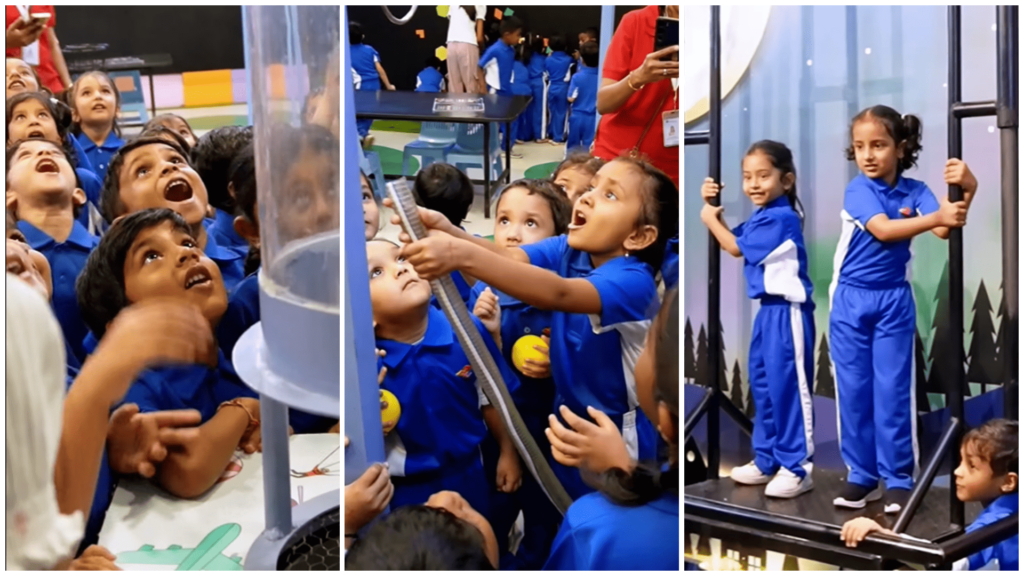

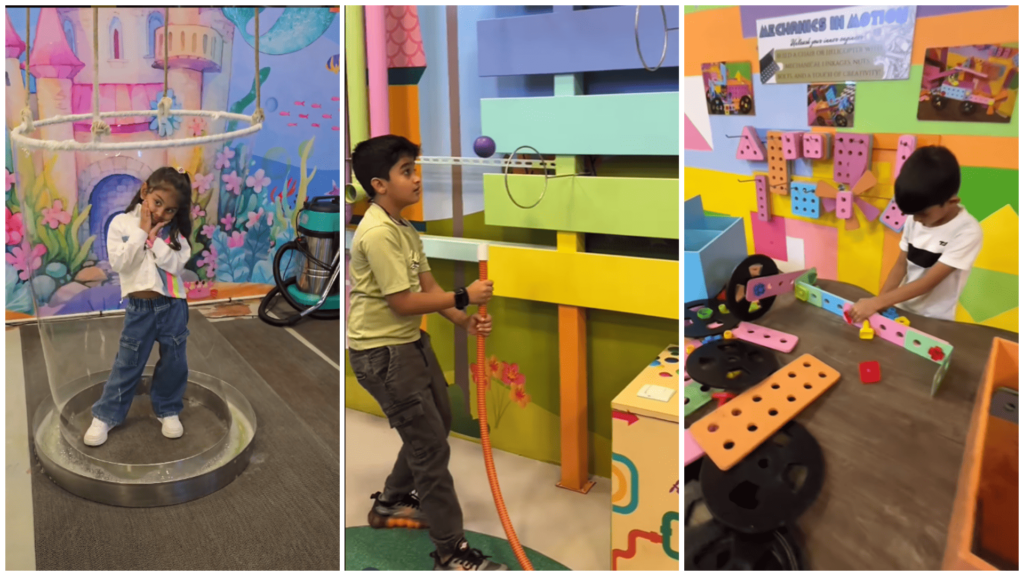
School children enjoying fun indoor field trip activities at MAD Labs Bangalore, exploring air challenges, teamwork games, and group play inside Snow City.
Field Trips, Educational Learning Games

Educational Learning Games: Redefining Field Trips in 2025

Redesigning Field Trips: How Educational Learning Games Create Deeper Learning The New School Imperative: Turning Field Trips into Measurable Learning Experiences Every academic year, schools invest time, budgets, and logistics into planning field trips. The buses arrive, students explore, and for a day, learning feels alive. Yet when administrators review outcomes, the return often falls short — the excitement fades quickly, and measurable learning retention is limited. This gap is now driving a fundamental shift in how forward-thinking schools view field experiences. The traditional field trip — long valued for exposure and engagement — is evolving into a measurable, curriculum-aligned, ROI-positive learning investment through educational learning games. At the intersection of field trips and game-based learning, educators are finding a way to merge curiosity, cognitive engagement, and performance improvement. When designed around educational learning games, field trips move from being one-day diversions to structured experiences that strengthen outcomes teachers can quantify and school leaders can report. Why Traditional Field Trips Underperform Most schools view field trips as enrichment — a break from routine. Yet research reveals the paradox: while student enjoyment peaks, retention plummets. Studies show only 10–15% of factual information from traditional field trips is remembered a month later. The reasons are clear: From an institutional perspective, that translates to low ROI — time and resources invested, with minimal long-term academic value. The solution? Replace passive observation with hands-on educational learning games that transform field trips into active discovery missions. The Science Behind Educational Learning Games in Field Trips Neuroscience confirms what educators observe daily: the brain learns best through doing. Educational learning games capitalize on this by embedding feedback, challenge, and intrinsic motivation into every activity. When integrated into field trips, this approach triggers: A 2023 Harvard Education Review study found that students on field trips using game-based challenges retained more content and demonstrated higher critical thinking in post-trip assessments. For decision-makers, this means quantifiable academic outcomes that justify budget allocation — transforming a discretionary expense into a proven pedagogical investment. How Educational Learning Games Transform Field Trips At innovative venues like MAD Labs Bangalore, field trips have been redefined. Instead of passive museum-style tours, students become active participants in hands-on discovery zones designed around STEM-aligned educational learning games. Traditional Model: Students listen to guides, observe demonstrations, and complete post-trip worksheets. Game-Based Field Trip Model: Students enter zones like Hydro Lab or Space Lab, solve physics-based puzzles, and get instant feedback — “Your circuit works!” or “Your air pressure is balanced!” The process converts curiosity into comprehension. This experiential design yields: For example, during a MAD Labs visit, teachers reported that “students weren’t memorizing — they were experimenting like scientists.” The outcome? Transferable understanding. Students who learned hydraulics through play could later explain pressure equations in class — demonstrating authentic comprehension. Institutional ROI: The Case for Game-Based Field Trips When evaluating field trips, school leaders often measure ROI through three lenses — engagement, academic outcomes, and brand value. 1. Academic ROI Educational learning games deliver measurable gains in comprehension and retention. Schools integrating game-based field trips report: 2. Engagement ROI Unlike traditional excursions where excitement peaks early and fades, structured educational learning games sustain curiosity. Students remain motivated for the duration — and continue discussing discoveries long after returning. 3. Institutional Brand ROI Schools offering experiential, research-backed field trips differentiate themselves as innovation-driven learning institutions. Parents perceive higher educational value, directly influencing admissions and retention. When a school chooses MAD Labs Bangalore for its field trip partner, it signals commitment to 21st-century learning — blending entertainment with neuroscience-based pedagogy. Designing Field Trips Around Educational Learning Games: A Framework for Decision-Makers For schools ready to upgrade field experiences, success begins with strategy. Here’s a framework for designing effective field trips that integrate educational learning games seamlessly into curriculum objectives. Step 1: Define Learning Outcomes Start with intent. Identify the skills or knowledge areas to reinforce — whether it’s force and motion, collaborative problem-solving, or critical thinking. Step 2: Choose Game-Based Venues Seek destinations that offer: Step 3: Pre-Trip Orientation Brief students on the goal. Frame it as a “STEM challenge” or “discovery quest” rather than a sightseeing visit. Provide a simple challenge sheet to promote active observation. Step 4: Active Learning During Trip Encourage inquiry-led exploration. Teachers act as observers and guides, prompting reflection with questions like “What are you testing?” or “How do you know that’s working?” Step 5: Post-Trip Reflection and Measurement Follow up with creative projects or group debriefs that link discoveries back to classroom learning. Use rubrics that measure curiosity, collaboration, and comprehension — not just memory recall. This structure ensures that field trips become integral parts of the learning cycle rather than one-off excursions. Voices from the Field: What Schools Are Reporting Principals: “Integrating educational learning games into our field trips gave us a measurable impact on student curiosity and participation. We now treat these experiences as part of our STEM curriculum — not just extracurricular.” Teachers: “The difference is clear — our students come back from MAD Labs talking about concepts, not just memories. They’re explaining what they discovered, not what they saw.” Parents: “My child could explain water pressure after playing at Hydro Lab. It’s rare to see such excitement about science!” These results make a compelling case for decision-makers balancing limited budgets with maximum learning return. Overcoming Common Objections “Isn’t this more expensive?” Not necessarily. Game-based field trips provide multi-outcome ROI — enhancing STEM, creativity, and teamwork simultaneously. Cost per learning outcome achieved is actually lower than traditional excursions. “Will it require more teacher training?” Venues like MAD Labs provide structured facilitation, minimizing teacher workload. Teachers guide reflection rather than instruction. “What about weather or logistics?” Indoor, climate-controlled setups eliminate cancellations and scheduling challenges, ensuring consistent execution. “How do we measure success?” Field trip success is evaluated via pre- and post-assessments, reflective journals, and classroom application of concepts learned — all easily integrated into school reporting systems. The Future of Experiential Education The education landscape is shifting from informational learning

School group visiting MAD Labs Bangalore for an experiential field trip, posing with teachers at the entrance inside Snow City.
Field Trips, Educational Learning Games

Experiential Field Trips 2025: Learning by Doing at MAD Labs

Field Trips in 2025: Moving From Passive Tours to Active Discovery The Classroom Divide: Observation vs. Discovery Picture this: two classrooms, two very different days. In one, students sit in rows as the teacher plays a video about the solar system. In the other, students are at MAD Labs in Bangalore, watching their own shadows dance in light tunnels, experimenting with air pressure, and laughing as bubbles the size of their heads float above them. Both are called field trips, but only one truly transforms how students learn. The question every educator is now asking: Do traditional field trips still engage students in meaningful ways, or have experiential field trips redefined what learning outside the classroom should look like? In 2025, when engagement and attention spans are at a premium, this comparison matters more than ever. While both styles promise educational value, the difference lies in depth  –  between memorizing and experiencing, between observation and participation, between knowing and understanding. Welcome to the evolution of learning beyond walls  –  where hands-on education, student engagement, and real-world learning take center stage. The Traditional Field Trip Experience: Structured but Static You remember it  –  the early-morning bus rides, packed lunches, teachers counting heads, and a hurried guide walking students through a museum or historical site. These traditional school field trips are classics for a reason. They provide exposure, a sense of adventure, and a break from routine. But while these educational field trips tick the box for experience, they often fall short on impact. Students listen more than they interact. They watch, they note, they move on. It’s learning by observation  –  what educators call passive learning. Whether it’s a museum, zoo, or heritage site, students tend to absorb facts momentarily, only to forget them soon after. Research shows that students retain less than 20% of information from guided lectures or tours. Despite being outdoors, these field trips often replicate the same limitations as the classroom: one-way communication and minimal interaction. After the Bus Ride: What Really Sticks Ask students a week later what they remember from those outdoor field trips, and the answers are telling: “The bus ride,” “The cafeteria,” “That funny guide.” Teachers nod knowingly. While excitement spikes initially, retention drops quickly. The challenge lies in connection. How do educators tie those experiences back to the curriculum? Most admit it’s difficult. Facts are consumed but not internalized. Curiosity fades when students can’t apply what they’ve seen. It’s the difference between seeing knowledge and doing knowledge. That’s where the modern experiential model comes in  –  a shift from traditional exposure to interactive understanding. The Experiential Field Trip: Learning by Doing At MAD Labs in JC Nagar, Bangalore, experiential field trips look nothing like their traditional counterparts. Instead of standing in lines, students dive straight into play zones designed for discovery. They lift themselves using pulleys in the Space Lab, experiment with light in the Glo Lab, and test balance and focus in the Wobble Lab. Each activity turns abstract science into something they can touch, test, and remember. This hands-on format keeps students engaged for hours, making learning feel like an adventure. The STEM field trips model encourages active participation, critical thinking, and curiosity building  –  key skills that extend beyond school walls. Every experiment becomes a story, every challenge a personal discovery. At MAD Labs, experiential learning isn’t about delivering facts; it’s about sparking questions. And that difference changes everything. Measuring the Difference: Engagement vs. Retention Traditional Field Trips: Experiential Field Trips: When students physically engage with concepts  –  like air resistance, energy transfer, or reflection  –  they remember them. Research suggests hands-on education boosts retention by 70–80% compared to passive observation. Teachers from Bangalore schools visiting MAD Labs report that post-trip classroom participation improves noticeably. This is real-world learning in action  –  students aren’t told what to think; they discover why things happen. A Tale of Two Field Trips Scenario One: The Traditional Museum VisitStudents board the bus at 8 AM, spend hours on travel, and finally arrive at a museum. A guide leads them through exhibits filled with plaques and timelines. Students scribble notes, whisper among themselves, and later recall a few facts. The experience fades as soon as the next test appears. Scenario Two: A Day at MAD LabsStudents arrive at 9 AM, 15 minutes from school. After a short orientation, they split into small groups  –  one heads to Bubble Bliss, another to Puzzle Lab, others to Air Lab. Laughter, collaboration, and experimentation fill the air. Teachers walk around observing natural learning moments: problem-solving, teamwork, creativity. A week later, students still discuss how their hands lit up at the Glo Globe or how pulleys made them feel weightless. That’s retention in motion. The difference? One is about exposure. The other is about experience. Why Educators Are Shifting to Experiential Trips For schools, modern field trip planning isn’t just about logistics anymore. It’s about measurable outcomes  –  engagement, understanding, and enthusiasm. STEM field trips for kids in Bangalore like MAD Labs check every box: Teachers consistently highlight three results: improved curiosity, higher participation, and long-term knowledge retention. In short  –  experiential field trips don’t just entertain; they educate. The Future of Educational Outings In 2025 and beyond, field trips are no longer about ticking the “outdoor learning” box. They’re about meaningful engagement, real discovery, and emotional connection. Traditional tours may introduce ideas, but experiential field trips ignite them. As one Bangalore educator put it, “After MAD Labs, my students didn’t just learn  –  they questioned, experimented, and wanted to know more.” If you’re an educator or parent planning your next outing, think beyond the brochure. Choose venues where discovery-based learning, hands-on education, and student curiosity thrive. Plan your school’s next experiential field trip at MAD Labs, inside Snow City, Bangalore  –  where learning meets fascination. FAQs 1. What age groups can attend field trips at MAD Labs?MAD Labs welcomes students from elementary to high school levels. Each zone is tailored to suit different ages, ensuring both

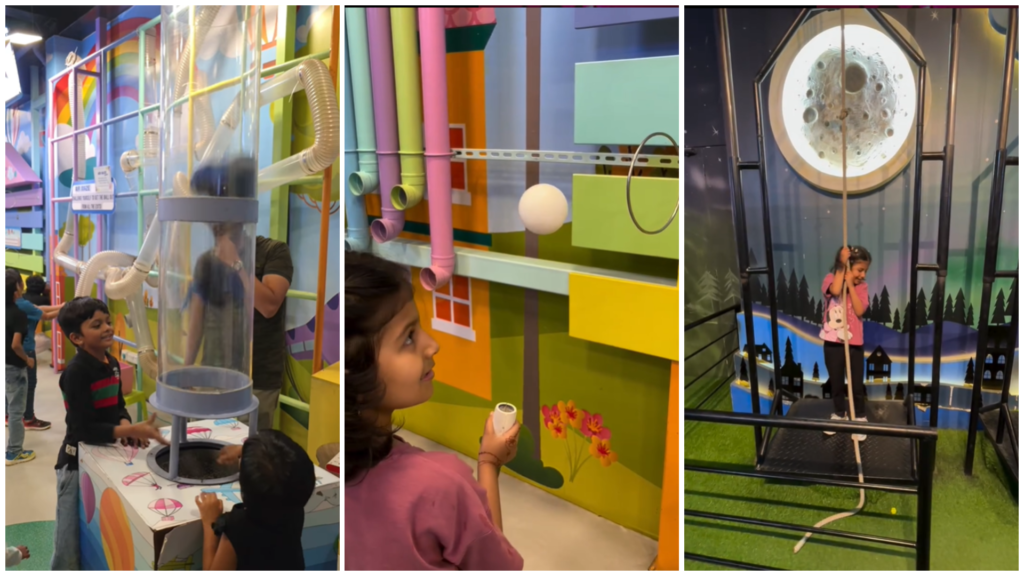
Children enjoying interactive indoor activities at MAD Labs Bangalore, including bubble play, air challenges, and creative building zones inside Snow City.
Educational Learning Games

Educational Learning Games for Kids | Science of Fun at MAD Labs

Educational Learning Games for Kids: Do They Really Improve Learning Outcomes? The Science Behind Joy and Learning Why do kids remember a game better than what they learned in textbooks? Neuroscience may have the answer. Educational learning games activate multiple brain regions at once, engaging emotion, decision-making, and reward pathways. That combination creates stronger memory traces, higher motivation, and better retention. In essence, educational learning games align learning with how the brain naturally works  –  through play, curiosity, and feedback. It might sound too good to be true  –  that something so fun can also be deeply educational. But as modern research reveals, the future of learning is not about forcing focus; it’s about creating environments that make focus effortless. That’s exactly what educational learning games do. They blend joy with learning, turning curiosity into cognition. This article explores the science, psychology, and real-world impact of game-based learning, and how venues like MAD Labs in Bangalore are making education feel more like exploration. The Brain Prefers Games: What Neuroscience Reveals When kids play, their brains light up  –  literally. Neuroimaging studies show that game-based tasks activate the hippocampus (memory), amygdala (emotion), and prefrontal cortex (decision-making). Unlike rote memorization, game-based learning involves emotional and sensory engagement, which enhances knowledge retention. Every time a child solves a challenge or earns a reward, the brain releases dopamine  –  the neurotransmitter linked to motivation. That “hit” of accomplishment encourages them to keep learning. Educational learning games don’t trick the brain into learning; they cooperate with its natural systems. Research suggests that students who learn through interactive activities retain up to 75% more information than through lectures. Engagement is not just higher  –  it lasts longer. The key lies in active learning and experiential education, not passive instruction. Beyond Entertainment: What Makes a Game Truly Educational Not all games qualify as educational learning games. What separates the good from the gimmicky are design principles grounded in learning science: At MAD Labs, every activity follows this blueprint. Whether it’s lighting up shadows in Loony Lights or solving water-flow puzzles in Hydro Lab, students experience learning through play. Each activity gives instant feedback and adapts to various learning styles, turning fun into lasting understanding. What the Research Shows Evidence for educational learning games continues to mount: A study of middle schoolers learning physics through hands-on educational learning games found 50% higher test scores than peers using textbooks. Why? Because multi-sensory engagement built deeper neural connections. Another analysis revealed that students using interactive learning games displayed greater persistence in solving problems, even beyond the classroom. Teachers report that students involved in gamified learning ask better questions, explore multiple solutions, and exhibit improved critical thinking development. They also demonstrate stronger social-emotional learning, since many collaborative learning environments involve teamwork. In short, when education feels like exploration, engagement follows naturally. This is why experiential education works  –  it mirrors how humans evolved to learn. MAD Labs: Where Games Meet Discovery Theory becomes reality at MAD Labs, Bangalore’s most engaging science-themed play space. For school groups, the center doubles as a live example of STEM educational learning games in action. Students begin their day thinking it’s all play. Within minutes, they’re engineering air systems in Air Lab, cracking visual riddles in Puzzle Lab, and balancing teamwork with logic in Wobble Lab. Every activity offers hands-on learning, instant feedback, and challenge-based mastery  –  the same framework seen in top-tier game-based learning platforms. The result? Kids forget they’re in a learning environment. But teachers notice the shift  –  formerly passive learners become curious, self-driven explorers. They return to class with stronger problem-solving skills and a sense of accomplishment that textbooks rarely evoke. The Psychology of Play: Why It Works Educational learning games succeed because they align with core behavioral principles: Traditional instruction asks students to sit still and absorb. Game-based education invites them to move, question, and engage. That shift  –  from compliance to curiosity  –  is where true learning begins. Addressing the Screen-Time Myth Many parents worry: aren’t these just games? The truth is, educational learning games differ vastly from entertainment gaming. At MAD Labs, most zones are screen-free and fully physical, blending STEM discovery with play. Kids learn by manipulating real-world materials, not pixels. Research distinguishes between passive consumption and active engagement. Only the latter enhances cognitive development. The key is interaction  –  not screens, but strategy, experimentation, and discovery. The Future of Learning Educational learning games aren’t replacing traditional classrooms  –  they’re enhancing them. They turn learning into something active, memorable, and meaningful. When children play to learn, they don’t just recall facts  –  they understand systems. For parents and teachers alike, the takeaway is clear: Choose educational learning games that engage curiosity, build skills, and adapt to learners’ needs. And if you’re in Bangalore, experience it firsthand. Visit MAD Labs inside Snow City to see how the science of play transforms education into discovery. FAQs 1. What age group benefits most from educational learning games?Educational learning games are effective for children of all ages, from preschoolers to high schoolers, as they can be adapted to different cognitive levels and subjects. 2. Are educational learning games just digital or online?Not necessarily. At MAD Labs Bangalore, most educational learning games are hands-on, screen-free activities that promote active engagement and real-world problem-solving. 3. How do educational learning games improve academic performance?They enhance memory retention, encourage critical thinking, and promote deeper understanding through immediate feedback and experiential learning. 4. What subjects do educational learning games cover?MAD Labs’ activities cover STEM-based concepts including science, technology, engineering, and math, blending fun with curriculum-aligned learning. 5. Are educational learning games suitable for school field trips?Yes! Schools regularly organize visits to MAD Labs for immersive STEM-based experiences that combine play, teamwork, and education. 6. How can parents encourage learning through games at home?Parents can introduce board games, puzzles, and interactive STEM kits that spark curiosity and support skill-building in a playful environment.

Kids engaging in hands-on STEM experiments and air pressure activities at MAD Labs Bangalore during an interactive science learning session.
Activites for Kids, Educational Learning Games

Activities for Kids in 2025 | Fun Educational Learning Games Bangalore

Activities for Kids in 2025: The Rise of Educational Learning Games-Based Play It’s 3 PM on a Saturday, and your child is tugging at your sleeve, asking for the hundredth time, “What can I do?” You scroll through suggestions for activities for kids  –  from art classes to amusement centers  –  but something feels off. You want your child to have fun, yes, but also to learn, grow, and stay curious. The problem? Most activities for kids seem to swing between mindless entertainment and rigid instruction. But what if there was a way to bridge both? What if your child could play and learn at the same time? That’s where educational learning games come in  –  the new era of play designed to combine excitement with evidence-based learning. Research increasingly shows that the best activities for kids are those that merge joy with knowledge, where fun becomes the foundation of deeper understanding. At MAD Labs in Bangalore, this concept isn’t theory  –  it’s reality. Here, every activity, every challenge, and every laugh hides a lesson in science, creativity, and critical thinking. Why Traditional Activities for Kids Miss the Mark Parents have been trying to balance fun and education for years. From painting workshops to dance classes, traditional activities for kids serve a purpose  –  they keep children occupied and social. But when it comes to measurable learning outcomes, research paints a different story. Studies show that passive learning  –  like watching demonstrations or listening to lectures  –  leads to lesser knowledge retention. In contrast, interactive educational learning games can raise retention. Students in active, hands-on environments perform better on tests compared to those in traditional setups. Why? Because most activities for kids lack three essential ingredients: feedback, challenge, and intrinsic motivation. When kids aren’t challenged or rewarded for progress, their attention fades quickly. Educational learning games solve this by design  –  they reward curiosity, not compliance. At MAD Labs, you can see this shift firsthand. The difference between watching a science experiment and performing one is the difference between observing learning and living it. What Makes Educational Learning Games Different Traditional activities for kids focus on external structure  –  a schedule, a task, a teacher’s instruction. Educational learning games flip the script by focusing on internal motivation. They are rooted in neuroscience, leveraging how the brain learns best: through play, repetition, and reward. The key components that make these games transformative include: Neuroscientists call this the “flow state”  –  when children lose track of time because their minds are fully engaged. At MAD Labs, this happens daily. Whether it’s building water circuits in Hydro Lab or experimenting with light at Loony Lights, educational learning games make abstract concepts tangible and thrilling. Unlike typical activities for kids, these games don’t separate fun from learning  –  they make them inseparable. From Playtime to Brain Time: The Real-World Impact Before: A child doing crafts at home, easily distracted after ten minutes.During: The same child at MAD Labs, focused for hours on balancing air pressure or solving puzzles in the Wobble Lab.After: That child now approaches school projects with confidence  –  experimenting, hypothesizing, and persisting. That’s the power of educational learning games. Research shows that children exposed to hands-on learning experiences perform 25–30% better in science and math. But the impact doesn’t stop at academics. These kids also show stronger collaboration, creativity, and resilience  –  traits that define success in life, not just school. Teachers frequently observe that students who engage with game-based learning activities ask more insightful questions and show improved persistence. Parents notice a transformation too: their children don’t view learning as a chore but as a challenge worth tackling. At MAD Labs, this happens every day. From the Puzzle Lab to the Space Lab, these interactive activities for kids inspire problem-solving, teamwork, and curiosity  –  all while being undeniably fun. Activities for Kids by Age: Learning That Grows With Them Ages 3–5:At this stage, curiosity is boundless. The best activities for kids emphasize sensory exploration and cause-and-effect learning. MAD Labs’ Kiddies Lab allows toddlers to experiment with textures, bubbles, and mirrors  –  educational learning games designed to develop early motor skills and pattern recognition. Ages 6–9:Here, logical thinking begins to bloom. Kids engage with STEM activities and games like the Hydro Lab or Puzzle Lab, discovering physics and problem-solving through play. These hands-on learning activities build confidence and early science literacy. Ages 10+:Older children crave challenge and purpose. Advanced zones like Space Lab and X-Cave introduce engineering and teamwork. These educational learning games simulate real-world problem-solving, turning abstract concepts into memorable experiences. Each level offers activities for kids that adapt to their developmental needs  –  a seamless blend of exploration and structured discovery. Why Parents and Educators Choose Game-Based Activities The shift toward educational learning games isn’t just a trend  –  it’s a movement driven by results. Parents love that these experiences are weather-proof, inclusive, and deeply engaging. Teachers love that they align with classroom objectives and demonstrate measurable learning outcomes. Key benefits include: Schools across Bangalore are now incorporating activities for kids like those at MAD Labs into their field trip programs, citing higher engagement and improved teamwork. Families appreciate that every visit feels like a mini adventure  –  one that sparks curiosity long after leaving. Common Parent Questions  –  Answered Is this just more screen time?Not at all. MAD Labs’ educational learning games are screen-free. Children interact with real-world experiments, not apps or digital interfaces. They touch, build, and explore  –  the essence of true hands-on education. What makes these games educational?Every zone has clear learning goals tied to STEM, creativity, and problem-solving. Feedback is instant, and outcomes are measurable  –  from teamwork to critical thinking. Can my child learn at their own pace?Yes. The adaptive structure allows kids to move at their comfort level, ensuring learning without pressure. Will my child actually enjoy it?Absolutely. Kids don’t realize they’re learning because they’re too busy having fun. Parents often report their children ask to return. The Future of Playful

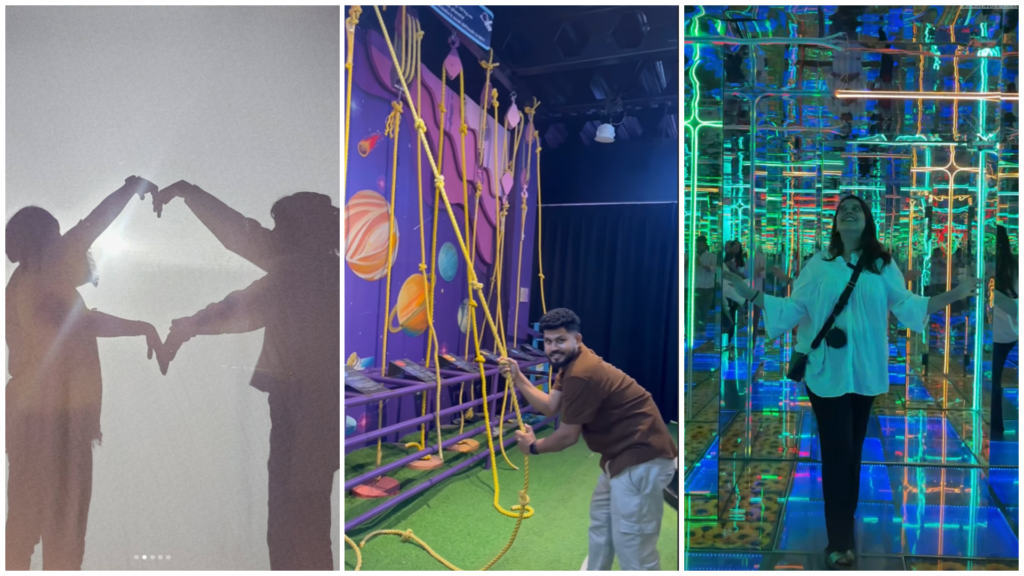
Visitors enjoying interactive zones at MAD Labs Bangalore, including shadow play, rope challenges, and the vibrant Infinity Walk mirror maze inside Snow City.
Educational Learning Games

Educational Learning Games in Bangalore | MAD Labs Snow City

Play and Learn: The Best Educational Learning Games for Kids in Bangalore at MAD Labs In today’s fast-paced world, parents and teachers are constantly looking for ways to make learning more engaging for kids. Worksheets and classrooms have their place, but children learn best when they play. That’s where educational learning games come in. These aren’t just about passing time – they help kids build problem-solving skills, creativity, and teamwork while having fun. If you’ve ever searched for educational learning games in Bangalore, you know how hard it can be to find activities that are safe, interactive, and actually enjoyable for children of all ages. The good news? Bangalore has one clear winner: MAD Labs inside Snow City, JC Nagar. Packed with 10+ interactive zones, MAD Labs offers a new way of play. It’s not about staring at a screen – it’s about hands-on, curiosity-driven games that help kids explore science, art, and imagination. No matter the weather outside, MAD Labs gives families and schools a place where learning feels like play. Why Educational Learning Games Matter Educational games aren’t just about fun; they shape kids for the future. Here’s why they’re so important: It’s no wonder more families and schools are choosing educational learning games as a way to help kids grow outside classrooms. MAD Labs – The Home of Educational Learning Games in Bangalore Located inside Snow City, JC Nagar, MAD Labs is designed to blend science with entertainment. Every zone doubles as a fun yet educational learning game, making it Bangalore’s go-to destination for families, schools, and even birthday celebrations. Here are some of the standout zones kids love: Each of these zones is safe, supervised, and designed for kids of different age groups – ensuring everyone from toddlers to teens finds something they love. How Schools Use MAD Labs for Learning For schools, MAD Labs is more than just a field trip – it’s an extension of classroom learning. Teachers love it because: That’s why many schools in Bangalore are adding MAD Labs to their list of preferred destinations for educational learning games. Family-Friendly Play + Learn Parents are always on the lookout for activities that entertain kids while teaching something valuable. MAD Labs strikes the balance perfectly. Families often combine MAD Labs with Snow Park or Eyelusion for a full-day outing. Pro Tips for Parents & Teachers Make the most of your visit with these tips: Comparison Table – MAD Labs Zones as Educational Games Zone Key Skill Learned Best Age Group Fun Factor ⭐ Puzzle Lab Problem-solving, logic 6–12 yrs ⭐⭐⭐⭐ Wobble Lab Balance & coordination 5–12 yrs ⭐⭐⭐⭐ Hydro Lab Science & teamwork 7–14 yrs ⭐⭐⭐⭐ Magno Lab Creativity, engineering 6–14 yrs ⭐⭐⭐⭐ ABC Lab Art & craft 4–10 yrs ⭐⭐⭐ Infinity Walk Perception, reflection All ages ⭐⭐⭐⭐ Glo Lab Light & color science 6–14 yrs ⭐⭐⭐⭐ MAD Talkies Storytelling, expression All ages ⭐⭐⭐ Testimonials – What Visitors Say Here’s what real visitors had to say about their experience with educational learning games at MAD Labs (paraphrased from Google reviews): FAQs – Voice Search Optimized Q1: What are educational learning games at MAD Labs? 👉 They include puzzles, treasure hunts, balance games, water experiments, and storytelling that blend fun with learning. Q2: How long does a visit to MAD Labs last? 👉 Typically 2–3 hours, but families often extend their visit with Snow Park or Eyelusion. Q3: Are educational learning games safe for kids? 👉 Yes. All activities are supervised, hygienic, and designed for child safety. Q4: Can toddlers participate in MAD Labs activities? 👉 Yes. Zones like Bubble Bliss and ABC Lab are perfect for younger children. Q5: Do schools organize field trips to MAD Labs? 👉 Absolutely. Many schools choose MAD Labs for STEM-inspired group learning. Q6: Can parents join the games too? 👉 Yes! Parents are encouraged to take part, making it a bonding experience. Q7: What’s the best age group for educational learning games at MAD Labs? 👉 While kids aged 5–14 enjoy most zones, toddlers and parents also have dedicated activities. Conclusion When it comes to educational learning games in Bangalore, MAD Labs stands out as the #1 destination. With 10+ interactive zones, a safe indoor environment, and activities that blend science with fun, it’s the perfect choice for families, schools, and birthday parties. 📍 Inside Snow City, Jayamahal Road, Bengaluru📞 Call: 7829 550 000🌐 Book now: https://themadlabs.in/ticket-booking/ Give your kids a reason to play, learn, and grow – all while having the time of their lives.

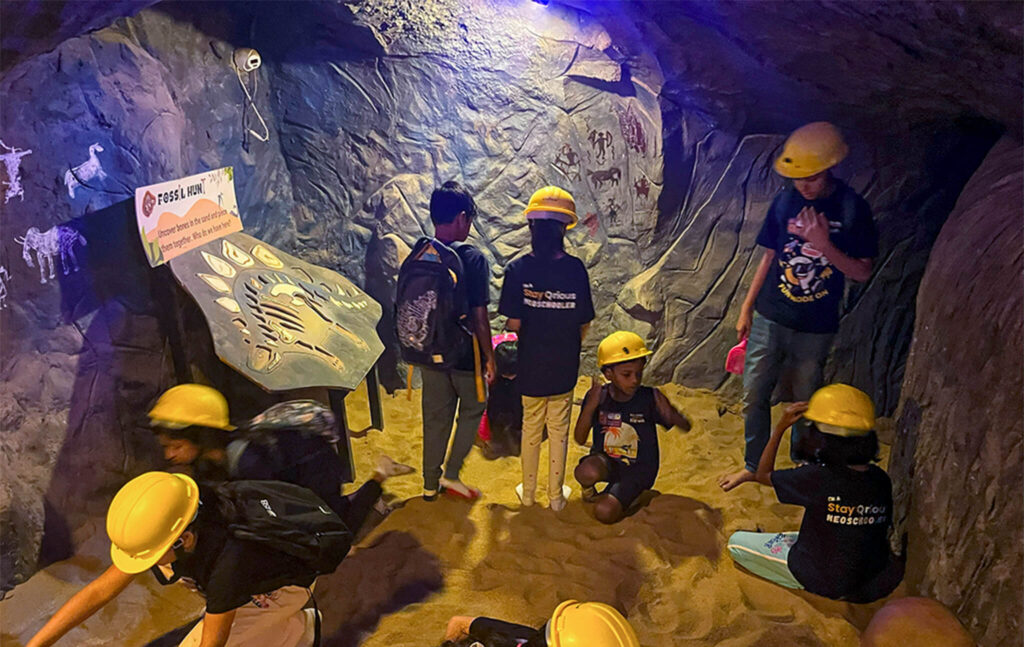
Children with helmets exploring Fossil Hunt cave activity at MAD Labs
Educational Learning Games

Play and Learn: Educational Learning Games in Bangalore at MAD Labs

Parents often search for ways to keep children engaged beyond classrooms and textbooks. The best approach? Learning through play. Educational learning games are designed to teach kids important skills like problem-solving, teamwork, and creativity – all while making sure they’re having fun. In Bangalore, one of the most unique destinations where kids can experience this balance is MAD Labs at Snow City, JC Nagar. With 10+ interactive zones, MAD Labs takes the concept of “play and learn” to the next level. Instead of passive games on screens, children get hands-on experiences that stimulate curiosity, imagination, and critical thinking. If you’re looking for educational learning games in Bangalore that combine fun with knowledge, here’s why MAD Labs should be at the top of your list. Why Educational Learning Games Matter Educational games go beyond fun. They give kids opportunities to: Unlike rote learning, games at MAD Labs encourage children to experiment, explore, and make discoveries on their own – just the way real learning should be. Educational Learning Games at MAD Labs MAD Labs is filled with immersive play areas that double as educational games for kids. Here’s a look at what children experience: 👉 Together, these zones create a complete package of educational learning games disguised as fun. Why Families and Schools Love MAD Labs MAD Labs is popular not just with kids but also with parents and educators. For Families For Schools Sample 2–3 Hour Play & Learn Itinerary If you’re visiting MAD Labs just for the educational games experience, here’s how your 2–3 hours might look: Time Activity 10:30 AM Start with X Cave treasure hunt 11:00 AM Wobble Lab + Puzzle Lab for teamwork & logic 11:45 AM Bubble Bliss + Infinity Walk for creativity 12:30 PM Builder Zone + ABC Lab for hands-on projects 1:00 PM Wrap up with MAD Talkies storytelling & family photos Full-Day Educational Experience For families or schools looking for a complete day of fun + learning, MAD Labs can be combined with nearby attractions inside Snow City: Time Activity 10:30 AM – 1:00 PM Educational games at MAD Labs 1:00 PM – 2:00 PM Lunch/snack break at Snow City Café 2:00 PM – 3:00 PM Trick-eye fun at Eyelusion 3:00 PM – 4:30 PM Science-in-snow at Snow Park (slides & snow play) 4:30 PM – 6:30 PM Fun rides at Fun World (roller coasters & kids’ rides) 👉 This makes MAD Labs part of a larger play-and-learn ecosystem perfect for families and schools. Visitor Information Info Details 📍 Location Inside Snow City, JC Nagar, Bangalore ⏰ Timings 10:00 AM – 7:00 PM daily ⏱️ Duration MAD Labs = 2–3 hours; Combo trips = full-day 🎟️ Tickets Available online & at venue 🌦️ Indoor 100% weather-proof 🍴 Food Snow City Café with snacks & drinks Why MAD Labs Tops the List of Educational Learning Games in Bangalore MAD Labs is more than just a play area – it’s a space where curiosity thrives. When it comes to educational learning games in Bangalore, nothing compares to MAD Labs. If you want your kids to experience the best of play and learn, head to MAD Labs inside Snow City, Bangalore. From treasure hunts and puzzles to giant bubbles and creative labs, this is where education meets excitement. Plan your visit to MAD Labs today and let your kids discover that learning can be the most fun game of all! FAQs1. What are educational learning games at MAD Labs? They include activities like treasure hunts, puzzles, bubble play, builder challenges, and creative labs that combine fun with learning.2. How long does it take to enjoy MAD Labs? A visit lasts about 2–3 hours, covering all 10+ zones.3. Can parents and teachers join the activities? Yes, MAD Labs is designed for families and school groups to participate together.4. Is MAD Labs suitable for toddlers and teens? Yes. Toddlers love Bubble Bliss and Builder Zone, while teens enjoy X Cave and Infinity Walk.5. Can MAD Labs be part of a full-day outing? Absolutely. Combine MAD Labs with Eyelusion, Snow Park, and Fun World for a full-day program.6. Are educational learning games safe for kids? Yes. The venue is indoor, hygienic, and fully monitored.7. Why is MAD Labs different from other play zones? Unlike regular play areas, MAD Labs integrates science, creativity, and problem-solving into every activity.

Educational Learning Games

Best Educational Learning Games in Bangalore for Curious Kids (No Screens Needed).

Bangalore’s Best Hands-On Learning Games Looking for educational learning games in Bangalore that don’t feel like yet another lesson plan? You’re not alone. Today’s parents and educators are constantly searching for experiences that are fun, hands-on, and meaningful  –  without relying on screens or rote memorization. That’s where MAD Labs comes in  –  a space built for interactive play and packed with educational learning games that spark creativity, problem-solving, and curiosity in every child. It’s not your typical edutainment center  –  it’s an imagination playground where educational learning games meet laughter, teamwork, and exploration. Let’s take a peek into Bangalore’s most exciting zones where learning happens by accident (but sticks for life). What Makes a Game Truly “Educational”? Not every game that teaches is worth your child’s time. A true educational learning game blends three things: At MAD Labs, every activity is designed with this trifecta in mind. No lectures. No instructions barked over a mic. Just zones where kids naturally explore  –  and learn while doing. From balancing blocks and racing water currents to building with magnets or solving shadow puzzles, every experience is engineered to teach through joy. The 14 Best Educational Learning Games at MAD Labs At MAD Labs, play is the medium  –  but learning is the outcome. Here’s how each zone brings educational learning games to life: 🎯 Puzzle Lab – Encourages logic, shape recognition, and teamwork.🧠 Hocus Focus Lab – Sharpens attention, motor control, and memory.🔩 Tech Mech Lab – Introduces basic mechanical concepts through robotics.🌪 Air Lab – Explores air pressure and motion in playful formats.🔍 X Cave Lab – Promotes sensory awareness and exploratory thinking.📦 Wobble Lab – Teaches balance, weight distribution, and structural integrity.🌈 Magno Lab – Develops pattern-making, symmetry, and spatial thinking.💡 Glo Lab – Mixes creativity with light and color-based play.🧼 Hydro Lab – Water-based games that demonstrate flow, direction, and force.🎭 MAD Talkies – Turns storytelling into narrative-building and expression.🚀 Space Lab – Simulates gravity-defying experiments and critical thinking.🎨 ABC Lab – Encourages open-ended creativity and decision-making.🧸 Kiddies Lab – Introduces early coordination, textures, and safe exploration.🪞 Infinity Walk – Stimulates perception and visual imagination. Each of these educational learning games is hands-on, exploratory, and built to help kids absorb without pressure. Why Kids Learn Faster When They Play Freely The best kind of learning? The kind they don’t even realize is happening. Research shows that when children engage in educational learning games through free play  –  without rigid instructions or pressure to perform  –  they: At MAD Labs, every corner is designed to let kids explore on their own terms. No right answers. No grades. Just endless “aha!” moments sparked by fun. It’s not just smart play  –  it’s smarter childhood. Designed by Experts, Loved by Kids MAD Labs isn’t just a random collection of toys and tunnels. It’s built by former researchers and creative engineers from IISc and NUS who deeply understand how children learn  –  and more importantly, how they want to learn. Every educational learning game at MAD Labs is: It’s why kids don’t want to leave  –  and why parents feel good letting them stay. No Screens. No Noise. Just Real Play. In a world of endless apps and notifications, screen-free time is becoming a luxury. That’s exactly what MAD Labs offers  –  a detox from digital, without losing the fun. Just pure, unplugged fun where your child’s hands, heart, and head are all engaged. And the best part? These educational learning games are far more memorable than anything an algorithm could suggest. Because here, imagination takes the lead  –  not a touchscreen. A Smarter Way to Play in Bangalore If you’ve been searching for educational learning games in Bangalore that your child will actually enjoy  –  MAD Labs is your answer. With 14 immersive zones, zero screens, and endless possibilities to play, explore, and discover, MAD Labs turns ordinary weekends, school holidays, and birthday outings into brain-boosting fun. Whether it’s building, balancing, racing, or storytelling  –  every visit plants the seed of curiosity. 📍Located inside Snow City, Jayamahal, Bangalore📞 Book a visit or school group: 7829 550 000🌐 Explore more: www.themadlabs.in Because when learning looks like play  –  kids never want to stop. FAQs: Educational Learning Games at MAD Labs 1. What age group are MAD Labs’ educational games designed for?MAD Labs offers zone-based play for toddlers (3+), school-age kids, and even teens. Each zone is crafted to be age-flexible and discovery-friendly. 2. Are the games aligned with school subjects?Not directly  –  and that’s intentional. The games are designed to spark curiosity, problem-solving, coordination, and storytelling in a playful, non-academic way. 3. How long does a typical visit take?A visit usually lasts 2 to 3 hours, giving kids ample time to explore most zones at their own pace. 4. Is prior booking required?Walk-ins are welcome, but bookings are recommended on weekends, holidays, and for group visits or birthdays. 5. Are the zones safe and supervised?Yes, each play area is regularly maintained, child-safe, and has supervision staff nearby for guidance and safety. 6. Do parents need to accompany their kids?For kids under 10, adult supervision is required. Older children can explore independently while parents relax nearby. 7. Can we combine MAD Labs with other attractions?Absolutely. MAD Labs is part of Snow City Bangalore, so you can create combo visits with the Snow Park, Eyelusion, or AR Zoo for a full-day adventure.

Scroll to Top