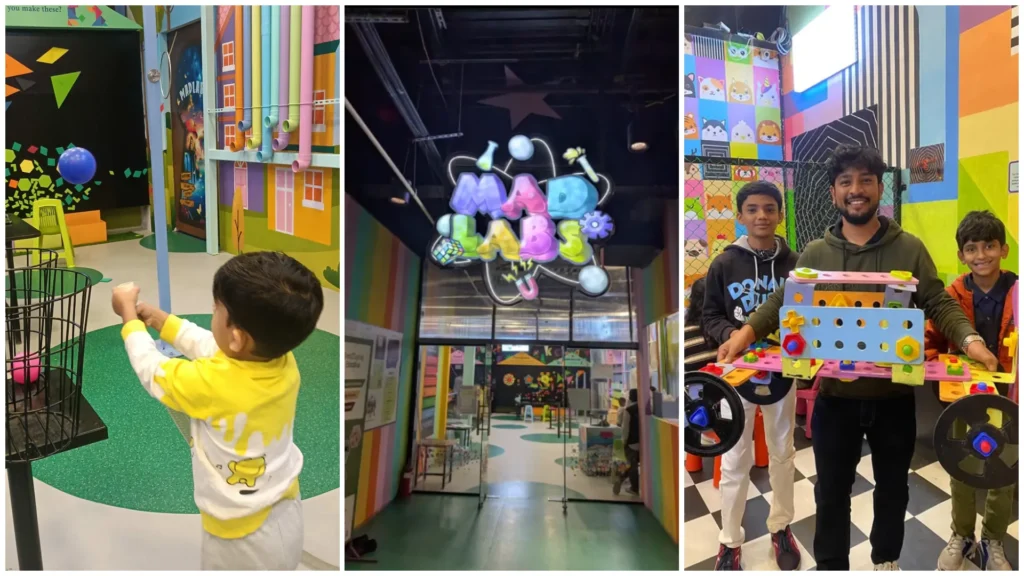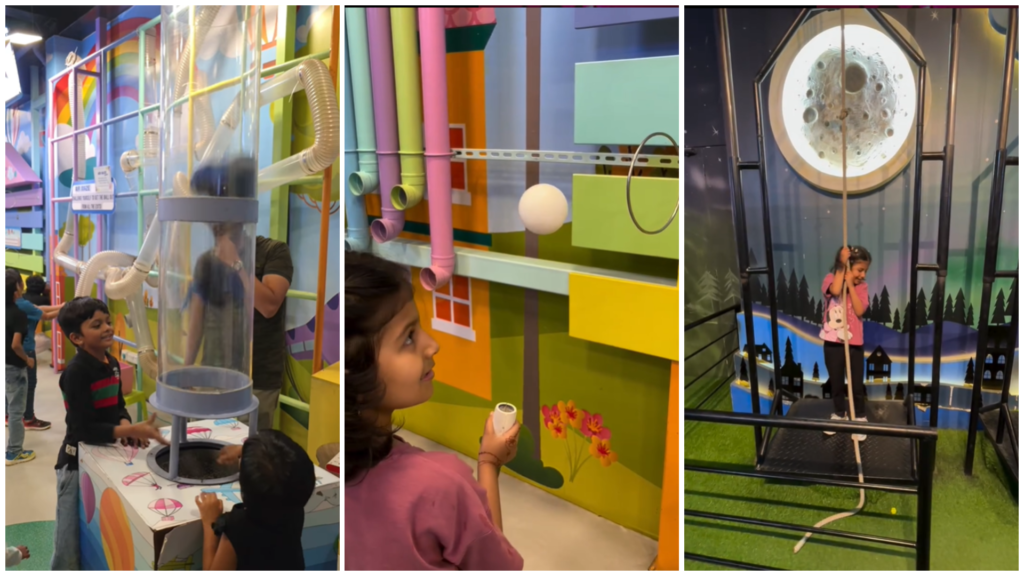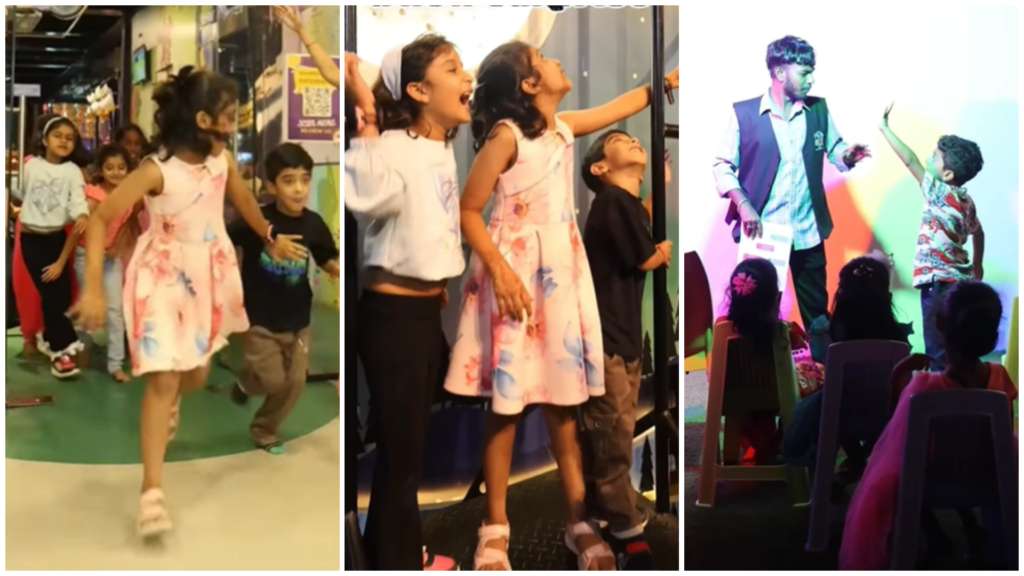

MadLabs Pre-Loader-5

Activites for Kids

Activites for Kids

Play Area Near Me: The Science of What Really Makes a Great Play Space

Beyond “Fun” – What Should You Really Look For? When you search “play area near me“, you’re met with countless options – each promising fun, color, and excitement. But any parent who has stepped into more than one play zone knows this truth: finding a play area near me is easy; finding the right one is not. Some spaces look appealing but lack developmental value. Others claim safety but fall short on design. Many parents feel overwhelmed, wondering: What actually makes one play area near me better than another? Here’s the reassuring news: child psychologists, play designers, and safety experts have studied what truly supports healthy growth through play. And when you understand these principles, evaluating any play area near me becomes effortless. Not all play areas near you are created equal – and this guide breaks down the science-backed principles that distinguish exceptional spaces. You’ll learn the five evaluation pillars grounded in child development through play and play space design principles, so you can choose with confidence. Let’s dive into the five evidence-based principles that every parent should use when choosing a play area. The Science of Great Play Spaces: 5 Principles to Evaluate Any Play Area Near Me Principle #1: Safety Standards That Go Beyond the Basics Safety is the foundation of any high-quality environment. Parents often look for visible hazards – sharp edges, broken pieces – but true safety goes much deeper. A practical tip: When evaluating a play area near me, check if surfaces are cushioned and if equipment is labeled by age. These two simple indicators reveal a lot about whether safety is merely advertised – or truly practiced. At MAD Labs (inside Snow City, Bangalore), weather-proof indoor design and structured zones ensure consistency and reliability – an example of how intentional design protects growing bodies. Principle #2: Variety and Complexity – The Brain’s Best Friend Children thrive when environments offer both diversity and progressive challenge. A space with only slides and swings can entertain, but it cannot fully support a child’s cognitive, physical, and creative development. Why variety matters: A landmark study by Herrington & Brussoni (2015) found that play areas with varied, complex structures encourage a wider range of play behaviors – leading to stronger physical and cognitive development. When you search for a play area near me, look for: Case study: MAD Labs features 30+ engaging zones – from Wobble Lab to Tech Mech Lab – each offering different challenges. These zones encourage motor coordination, mental focus, planning, and imagination in one seamless environment. Principle #3: Sensory Engagement  –  More Than Just Physical Play Great play spaces stimulate more than movement – they activate the senses. Sensory-rich environments fuel emotional regulation, cognitive growth, and neural development. Sensory play activates: Research from the Cleveland Clinic shows sensory play helps build neural connections essential for higher-level learning, attention, and problem-solving. This becomes even more significant knowing that over 20% of children experience sensory processing differences. What to look for in a play area near me: At MAD Labs, zones like Bubble Bliss, Infinity Walk, Glo Lab, and Loony Lights offer rich multisensory stimulation – helping children feel more engaged, centered, and confident. Principle #4: Social-Emotional Learning Opportunities A well-designed play area supports more than movement – it nurtures growing hearts and minds. Social-emotional development thrives in environments that foster: Child psychologists consistently highlight that play areas offering cooperative challenges build resilience, communication, and conflict-resolution skills. Look for a play area near me that supports: At MAD Labs, collaborative experiences – like Balance Buster, team puzzles, or Air Lab challenges – naturally create opportunities for teamwork among families and friends. Principle #5: Learning Embedded in Play Children learn best by doing – not watching. Play that integrates real-world concepts builds curiosity, understanding, and long-term memory. Studies show that children retain up to 75% more information when learning through hands-on exploration. What to look for when choosing an educational play area near me Bangalore: Case study: MAD Labs was built by innovators from IISc and NUS, ensuring each zone blends fun with intuitive discovery. Kids engage with concepts like forces, energy, motion, and cause-effect – without ever feeling like they’re in a classroom. Zones like Hydro Lab, Tech Mech Lab, and Air Maze are perfect examples. The outcome? Elevated curiosity, improved problem-solving, and more confident learners. How to Evaluate Any Play Area Near Me: A Quick Checklist Use this simple guide the next time you’re comparing spaces: Safety ☐ Soft surfacing under all major equipment☐ Age-appropriate labels (2–5, 6–10, mixed)☐ Clean, rust-free, well-maintained structures☐ Clear sightlines and bright lighting Development ☐ Offers multiple play types (climb, jump, balance, build)☐ Includes sensory elements (textures, sounds, movement)☐ Provides progressive challenge levels Learning ☐ Has problem-solving or open-ended zones☐ Integrates real-world concepts intuitively☐ Staff who engage, guide, and maintain safety Social ☐ Collaborative or team-play opportunities☐ Open space for flexible play ☐ Inclusive design for all age groups When searching “play area near me“, this checklist helps separate visually appealing spaces from truly high-quality ones. Choosing with Confidence The best play area near me isn’t simply the closest or the most affordable – it’s the one designed with your child’s holistic development in mind. Next time you search “play area near me“, you’ll know exactly how to evaluate safety, sensory richness, cognitive value, and social potential. Finding a great play area near me ultimately means finding a space that supports physical growth, emotional wellbeing, social confidence, and cognitive curiosity. Child development experts agree: thoughtful play environments shape happier, stronger, and more capable kids.Want to experience a space that checks every box? Visit MAD Labs inside Snow City, Bangalore – where evidence-based play design comes alive through vibrant, interactive zones for families, friends, and groups. FAQs 1. What makes a play area truly safe for children?Soft surfacing, maintained equipment, age-based zones, and clear sightlines are essential indicators of a safe environment. 2. How do sensory elements benefit children in play areas?Sensory play supports neural development, emotional regulation, motor skills,

Activites for Kids

Game On: How to Design Educational Learning Games for Effective Field Trips

Field Trips Are Good – Field Trips with Games Are Better Traditional field trips are memorable, exciting, and a welcome break from routine – but they often miss their deepest purpose: long-term learning. Many students return excited but unable to articulate what they actually learned. That’s where educational learning games change everything. Research shows that when students actively explore, make decisions, solve challenges, and receive real-time feedback, their engagement and retention dramatically increase. And when these games are woven into field trips, students don’t just observe – they think, test, question, and apply. This guide gives teachers and school leaders a practical framework to design or select the right educational learning games before, during, and after field trips. With examples from MAD Labs, you’ll see how game-based learning turns any field trip into a curriculum-aligned, high-impact learning experience. When field trips are combined with well-structured educational learning games, they stop being one-off outings and become powerful, experiential learning arcs. Start with the End: Learning Objectives First Before you design any game, define what students must learn. A good game is not an add-on or gimmick – it is the delivery system for your learning outcomes. Step 1: Link to Curriculum Standards Think in terms of: Step 2: Translate Standards into Student-Friendly Goals Examples: Step 3: Match Objectives to Game Types If your objective is observation, choose scavenger-style games. If it’s experimenting, choose mission-based challenges. If it’s analysis, choose reflection or comparison games. Example  –  MAD Labs (STEM Field Trip): Learning objectives might include: These objectives then guide the design of missions, challenges, and team tasks. Core Game Design Principles for Field Trips Designing educational learning games for real-world, high-energy field trips requires simplicity, alignment, and adaptability. Here are the five principles that matter most: 1. Alignment with Field Environment Games work best when they use what the venue naturally offers. Why it matters: Students learn more when tasks connect directly to physical experiences. How to apply: 2. Clear Rules, Simple Mechanics Field trips are noisy, fast-paced, and time-bound. Why it matters: Overly complex games collapse under real-world conditions. Apply it like this: 3. Immediate Feedback Loop Feedback is central to educational learning games. Why it matters: Students stay motivated when they know instantly whether they’re on the right track. Apply it like this: 4. Meaningful Challenge (Not Just Points) Avoid shallow point-chasing. Why it matters: Real thinking happens just above a student’s comfort zone – the “learning sweet spot.” Apply it like this: Replace: “Find 5 objects.” With: “Identify 3 examples of motion energy and explain how each works.” 5. Collaboration Over Competition Field trips are perfect opportunities for teamwork. Why it matters: Collaborative learning improves communication, retention, and critical thinking. Apply it like this: Pre–During–Post: How Educational Learning Games Fit Throughout Field Trips The highest-impact field trips structure learning across all three phases. A. Pre-Trip Games (Priming the Brain) Before students even leave school, games should: Examples: B. On-Site Games (The Heart of the Learning Experience) This is where real engagement happens. Types of On-Site Games: Designing for Field Conditions: At MAD Labs: Each zone (Puzzle Lab, Hydro Lab, Infinity Mirror, X-Cave) naturally becomes a challenge level. C. Post-Trip Games (Consolidation) Learning becomes permanent only when students reflect and articulate. Post-Trip Game Examples: Using pre–during–post games transforms a 2-hour field trip into a 3–5 day learning arc. Ready-Made Game Templates (That Work at MAD Labs or Any Hands-On Venue) Here are plug-and-play templates educators can use immediately: 1. Mission-Based Exploration Game Setup: Mechanics: At each station, students: Outcome: Reinforces the scientific method + hands-on discovery. 2. Field Trip Evidence Hunt Setup: Replace facts with mysteries. Examples: Mechanics: Students write or sketch their findings. 3. Design-Your-Own Station Challenge Setup: After exploring 4–5 stations, teams design a new one. Mechanics: Teams must define: Outcome: Deepens conceptual and creative thinking. Measuring Success: Are Your Field Trip Games Working? Use these metrics to evaluate your field trip lessons: 1. Engagement Ask: Use a 1–5 scale. 2. Evidence of Learning Look for: 3. Transfer Check whether students can: 4. Teacher Reflection Consider: The true test of educational learning games is whether they change student thinking – not just entertain. Why MAD Labs Is the Perfect Playground for Field Trip Game Design MAD Labs is naturally designed for game-based field learning: Built-in “Game Levels” 30+ zones = instant mission structure: Game-Friendly Features Support for Teachers Field trips at MAD Labs already function like real-world educational learning games – teachers just bring the structure. Designing Field Trips That Play, Teach, and Stick Field trips are too valuable to be passive. When educators combine structured educational learning games with interactive field trips, the result is: Next time you plan field trips, start with learning goals, add purposeful game mechanics, and choose environments that support hands-on discovery – like MAD Labs.This isn’t “more work” for teachers. It’s smarter work – and it makes every minute of a field trip count.

Activites for Kids

Field Trips That Stick: What the Science Reveals About Transformative Learning

Why Some Field Trips Transform Learning (And Others Are Forgotten) You’ve probably experienced it yourself: one field trip you still remember vividly decades later, and others you forgot by the next morning. What makes the difference? Is it the place? The guide? The activities? Or is there actual neuroscience behind why certain field trips have lasting learning outcomes while others fade quickly? Not all field trips are created equal. Research shows that specific design elements – not luck – predict whether field trips stick. Some spark curiosity, trigger emotional engagement, and build strong memory pathways. Others are passive, disconnected from curriculum, and leave almost no long-term impact. Understanding the science behind effective field trips empowers educators to design experiences that genuinely improve retention, boost engagement, and create learning that endures. This guide breaks down: By the end, you’ll have a field trip effectiveness framework you can apply to any destination. The Neuroscience: How Memory Works on Field Trips Modern neuroscience gives us clear answers about why some experiences “stick” better than others. Principle 1: Sensory Richness Builds Neural Pathways Field trips that engage multiple senses – sight, sound, touch, movement – create more neural connections. The brain encodes sensory information in multiple systems, making memories easier to retrieve. Research Insight: Multi-sensory learning improves retention by up to 75% compared to verbal instruction alone. What this means for educators: Choose field trips where students touch, build, experiment, and move – not those where they just listen. Principle 2: Context + Emotion = Memory The hippocampus – the brain’s memory hub – is activated when learning is both emotionally engaging and context-rich. Field trips that provoke curiosity or excitement create strong “memory anchors.” Passive, guide-led trips? Not as effective. Discovery-driven trips? Far more memorable. Principle 3: Active Retrieval Beats Passive Exposure Students remember what they actively retrieve – not what they passively hear. Field trips where students: …activate the brain’s retrieval systems. Research: Active learning improves long-term retention by 55%. Principle 4: Spacing & Sleep Consolidation Matter Memory is reinforced during sleep. Field trips paired with post-trip activities show dramatically improved long-term retention. What Research Says Field Trips That Stick Have in Common Across decades of research, five principles consistently predict field trip effectiveness. 1. Curriculum Alignment Field trips aligned with curriculum deliver 50% better learning outcomes. Green Flag: Clear, intentional learning objectives tied to school standards.Red Flag: “Fun day out” with no connection to lessons. 2. Pre-Trip Preparation Activating prior knowledge improves comprehension and retention. Green Flag: Pre-trip worksheets, videos, or concept discussions.Red Flag: Students arriving without context. 3. Active Engagement Over Passive Observation Hands-on, problem-solving activities boost engagement and memory. Green Flag: Students manipulate equipment, conduct experiments.Red Flag: Students just watch a guide speak. 4. Multi-Sensory & Emotional Engagement Field trips that trigger wonder, curiosity, or excitement create strong emotional markers. Green Flag: Discovery-focused environments rich with tactile, visual, and kinesthetic experiences. 5. Post-Trip Consolidation Reflection activities strengthen neural pathways. Green Flag: Post-visit assignments, retrieval tasks, problem-solving prompts.Red Flag: Trip ends when the bus leaves. The Field Trip Evaluation Rubric: Rate What Actually Matters Use this 6-dimension rubric to evaluate any field trip: Dimension 1 (Poor) 3 (Good) 5 (Excellent) Pre-Trip Preparation No preparation Basic orientation Rich context-building; clear objectives Curriculum Alignment No connection Vague alignment Strong alignment with curriculum goals Active Engagement Mostly passive Some hands-on Discovery-based, student-led exploration Multi-Sensory & Emotional Engagement Sterile Limited sensory variety Emotionally rich, multi-sensory, wonder-driven Facilitator Support Minimal Basic guidance Skilled educators guiding learning Post-Trip Consolidation No follow-up Basic reflection Structured retrieval & application activities Overall Score Interpretation How MAD Labs Scores on the Research Rubric MAD Labs is a case study of a field trip designed with learning science – not just entertainment – in mind. Dimension Score Why Pre-Trip Preparation 5/5 Pre-visit worksheets, clear STEM objectives, teacher briefings Curriculum Alignment 5/5 Every zone maps to physics, biology, engineering concepts Active Engagement 5/5 30+ fully hands-on, discovery-based zones Multi-Sensory & Emotional Engagement 5/5 Glow Lab, Bubble Bliss, Infinity Mirror, tactile & sensory-rich zones Facilitator Support 4/5 Trained staff guide activities, ensure safety, support exploration Post-Trip Consolidation 4/5 Reflection worksheets provided; optional follow-up activities Overall Score: 28/30 – Transformative Learning MAD Labs stands out as one of the best field trips for schools in Bangalore because its design aligns with neuroscience-backed learning principles. Field Trips vs. Classroom Learning: What the Data Shows Metric Classroom Lecture Passive Field Trip Research-Backed Field Trip Retention After 1 Month 10–15% 15–20% 60–75% Critical Thinking Medium Low High Student Engagement Low–Medium Medium High Motivation Levels Low Medium–High High Real-World Transfer Low Low–Medium High Key Insight: Field trips aren’t inherently effective. Only well-designed experiences beat classroom learning. [Image 6] How to Design Better Field Trips (Practical Guide) Step 1: Set Clear Learning Objectives Define what students should understand or do after the trip. Step 2: Prepare Students Before the Trip Introduce key concepts, vocabulary, and expectations. Step 3: Prioritise Hands-On Discovery Choose destinations where students do things – not just watch. Step 4: Build Sensory & Emotional Engagement Use surprise, novelty, and multi-sensory setups to trigger memory encoding. Step 5: Plan Post-Trip Reflections Use worksheets, discussions, or mini-projects to strengthen retrieval. Making Field Trips Worth the Time Well-designed field trips are one of the most powerful tools in education. The research is clear: multi-sensory, curriculum-aligned, emotionally engaging experiences produce lasting learning outcomes. Field trips don’t need to depend on luck. They need intentional design. Use the rubric above to evaluate field trip destinations and ensure they align with learning science.If you’re in Bangalore and looking for field trips that stick, MAD Labs offers research-backed STEM experiences that create lasting curiosity and 4–6 weeks of retention – far above traditional field trip outcomes. FAQs 1. What makes a field trip truly effective for learning?  Effective field trips align with curriculum goals, include pre-trip preparation, offer hands-on discovery, engage multiple senses, and include post-trip reflection. 2. Are field trips better than classroom learning?  Only when they follow research-backed principles. Passive

Activites for Kids

Educational Learning Games: What Brain Science Shows Kids Really Learn

What If “Just Playing” Was the Brain’s Best Way to Learn? Parents often notice something fascinating: a child will lose focus during worksheets… yet spend 40 minutes intensely solving a puzzle, building a contraption, or beating a level in a game. They’ll fail, retry, explore, adjust – and stay motivated. This isn’t an accident. Educational learning games work because they tap into the brain’s natural learning systems. They aren’t “sugar-coated lessons.” They’re science-backed environments that create the ideal conditions for curiosity, persistence, and deep learning. This article breaks down the neuroscience behind why learning games work – plus how to evaluate whether a game is truly educational or just flashy edutainment. And yes, this applies to real-world, physical environments (like science centers and hands-on learning spaces), not just apps. The Brain on Games  –  What’s Actually Happening? Game-based learning activates multiple brain systems at once. Here’s what the research shows. A. Dopamine: The Motivation Molecule at Work Games provide: Each of these triggers dopamine, the neurotransmitter responsible for motivation, attention, and persistence. Dopamine isn’t about pleasure – it’s about drive. When a child receives feedback (“yes, that worked!”), their brain lights up with dopamine, pushing them to try again. Why this matters for educational learning games: This is why learning games help children push through challenges they’d normally avoid. B. Repetition & Neural Pathways: How the Brain Wires Itself Every time a child repeats a game action – balancing blocks, solving puzzles, redirecting a laser beam – they strengthen neural circuits. This is neuroplasticity: the brain physically strengthening pathways through repeated, varied practice. Unlike rote drilling: The result: learning that “sticks” because the underlying brain circuitry is reinforced. C. Challenge, Failure & Executive Function Good games do something worksheets never do – they make failure safe. Brain imaging studies show that the right level of difficulty activates the prefrontal cortex – the seat of: In educational learning games, children: This strengthens executive function – arguably the single strongest predictor of long-term academic success. Is This Game Actually Educational? The Brain-Science Test Not all “learning games” teach. Some are just flashy drills. Here’s a science-backed way to tell the difference. 5 Signals of a Brain-Boosting Educational Learning Game 1. Clear, Adaptive Goals Kids know what success looks like – but the challenge grows as they improve. 2. Immediate, Meaningful Feedback The child tries → gets info → adjusts. This fuels the dopamine learning loop. 3. Challenging, Not Frustrating The sweet spot: slightly above current ability. (The Zone of Proximal Development.) 4. Requires Thinking & Strategy Kids must: 5. Reflection or Application Happens Naturally They pause and think: “What worked? What should I try next?” Red Flags: It’s Probably Just Edutainment If… Why This Applies Off Screens Too: MAD Labs as a Real-World Brain Gym Educational learning games don’t need to be digital. In fact, physical, multi-sensory, real-world experiences activate even more of the brain. MAD Labs in Bangalore functions as a living lab for game-based learning. How MAD Labs Activates the Brain 1. Dopamine-Driven “Aha!” Moments Kids solve STEM puzzles, experiment with forces, play with light, water, airflow, and mechanics. Each discovery triggers dopamine. They get: 2. Neural Wiring Through Hands-On Repetition Stations like the Hydro Lab, Magnet Lab, and Gravity Zone require multiple attempts. Kids adjust variables, try again, and repeat until they get it right. This builds strong neural circuitry for: 3. Executive Function Training Hands-on challenges require: This is real-world executive-function training – without the child realizing they’re “learning.” 4. Reflection Moments Built In Parents, teachers, and facilitators naturally ask: These questions consolidate learning – right there on the spot. Why MAD Labs Beats Passive Learning Spaces Traditional museums: MAD Labs: It replicates what the best educational learning games do – only with more senses engaged. What Research and Meta-Studies Say Decades of research confirm what parents intuitively notice. Study Highlights Key Insight Not all games are equal. The design principles – not the format – determine whether a game truly builds the brain. The Parent & Teacher Guide: How to Choose the Right Learning Game Use this practical checklist to evaluate any educational learning game – digital or physical. The 5-Point Brain Test Checklist If the activity scores 4 or 5, it’s a strong learning game. If it scores 2 or below, it’s probably edutainment. Use This for Choosing: Why Variety Matters Rotate between: Different game types engage different neural systems. Games Are Not a Gimmick – They’re the Brain’s Native Language If you want learning that truly sticks, don’t feel guilty about games. Feel guilty about boring, passive learning that ignores how the brain actually works. Educational learning games: And when you bring your child to a place like MAD Labs, you’re giving them hundreds of mini win-moments – each one strengthening their brain. Because in the end, kids don’t learn best by being told. They learn best by doing, trying, failing, adapting, and discovering.That’s what real educational learning games unlock. FAQs How does MAD Labs use learning games?Every station functions as a real-world game – kids experiment, get feedback, adjust, and discover STEM concepts through hands-on challenge. What makes an educational learning game effective?An effective learning game offers clear goals, adaptive challenge, immediate feedback, and real problem-solving – not just fast tapping. Are hands-on learning games better than digital ones?Hands-on games engage more senses, which strengthens neural pathways. Digital games can be effective too, but physical environments like MAD Labs activate deeper cognitive processing. How do learning games build motivation?They activate the dopamine reward loop – small wins, progress, and feedback keep kids trying, even when challenges get tough. How do I know if a game is just edutainment?If the game has no strategy, no concept transfer, and kids can win without thinking – it’s probably edutainment. How often should kids play educational learning games?Short, regular bursts work best. Mix digital, physical, collaborative, and outdoor games for whole-brain development. What skills do educational learning games build?Executive function, problem-solving, working memory, resilience, spatial reasoning, and

Activites for Kids

Activities for Kids Menu: Screen-Free Ideas for Every Situation

Your Go-To Menu for Activities for Kids Stuck at home with restless kids? Dreading the next dramatic “I’m bored!”? What you need isn’t just a random list – it’s a menu of activities for kids you can dip into based on the exact situation you’re in. Most parents already know a few go-to ideas, but they don’t always fit the moment. A high-energy obstacle course isn’t ideal on a sick day; a quiet puzzle won’t help when your child is bouncing off the walls. Finding the right activities for kids depends on what you need in that moment – calm, energy release, connection, or simply something fresh. Think of this guide like a restaurant menu. Each “category” is a different situation, and under each one you’ll find 3–4 activities for kids with: Our curated menu of activities for kids helps you navigate rainy days, sick days, travel time, high-energy outbursts, and quiet-time needs – without defaulting to a screen. Keep this page bookmarked; you’ll return to it whenever you need fast, realistic ideas, whether you’re at home in Bangalore or on the move. Table of Contents Menu Section: Rainy Day Activities for Kids ☔ Situation: It’s pouring outside, the park is a mud puddle, and the kids are starting to climb the furniture. These screen-free indoor ideas keep them busy, moving, and entertained. Activity 1: DIY Indoor Obstacle Course Activity 2: Cozy Reading Fort & Story Time Adventure Activity 3: Kitchen Fun Reactions (Foam Volcano or Gooey Slime) Activity 4: Paper Craft Marathon (Masks, Planes, and Simple Folding) Menu Section: Sick Day Activities for Kids 🤒 Situation: Your child is under the weather – bored, a bit cranky, but too tired for running or jumping. These ideas keep them engaged without draining their energy. Activity 1: Quiet Craft Table (Collage, Stickers, and Colouring) Activity 2: Audiobook or Podcast Snuggle Time Activity 3: Soft Sensory Play (Play-Dough, Kinetic Sand, Salt Dough) Activity 4: Bedside Puppet Show or Toy Theatre Menu Section: Too Much Energy Activities for Kids ⚡ Situation: Your child is bouncing off the walls, and you need safe, fun ways to help them burn off that extra energy. Activity 1: Dance Party & Freeze Poses Activity 2: Living Room Yoga & Animal Stretches Activity 3: Indoor or Balcony Scavenger Hunt Activity 4: DIY Sports Games (Balloon Volleyball, Target Toss) Menu Section: Traveling with Kids – Long Journey Activities 🚗 Situation: Long drive, train ride, or flight ahead? These activities for kids help you avoid the all-day-screen routine and keep everyone sane. Activity 1: Travel Activity Kits Activity 2: “I Spy” and Make-Up-a-Story Games Activity 3: Snack Surprise Box Activity 4: Audiobook or Story Series for the Road Menu Section: Quiet Time Activities for Kids (Who Need to Calm Down) 🌙 Situation: Your child is overstimulated, emotional, or you’re approaching bedtime. These ideas gently guide them into a calmer state. Activity 1: Guided Relaxation or Breathing Game Activity 2: Colouring Time or Mandala Sheets Activity 3: Window Watching & Nature Notes Activity 4: Quiet Sensory Box Menu Section: Grandparent-Approved Activities for Kids 👵👴 Situation: Grandparents are visiting, or your child is spending the day with them. These activities for kids are screen-free, simple, and perfect for all ages to enjoy together. Activity 1: Baking or Simple Cooking Together Activity 2: Story Sharing & Family Tales Activity 3: Garden Time or Balcony Plant Care Activity 4: Classic Board Games or Card Games Bonus: Budget-Friendly Activities for Kids Using Household Items 💡 Mini Menu: When money or time is tight, these budget-friendly activities for kids save the day. Each idea uses items you already have at home – perfect activities for kids in small spaces or at the end of a long day. Your Bookmark-Worthy Activities for Kids Menu Parenting doesn’t come with a pause button – but a good menu of activities for kids can make the tough days feel lighter. Next time you urgently need activities for kids – for a rainy day, a sick day, or a car ride – open this guide and pick the “dish” that fits your situation. Remember: great activities for kids aren’t complicated or expensive. The best moments often come from simple ideas adapted to your child’s mood, energy level, and environment. If you’re in Bangalore and want a bigger outing that combines movement, sensory fun, and group bonding under one roof, MAD Labs inside Snow City offers an all-weather indoor space with interactive zones for families, friends, and groups of all ages. Bookmark this page, share it with fellow parents, and the next time someone asks, “What should my kids do today?”, you’ll have an entire menu of answers ready to go.

Activites for Kids

Activities for Kids + Venue for Birthday Party: The Stress vs Engagement Matrix

The Three-Way Tension: Stress, Engagement & Value You want your kid to have an unforgettable birthday. You want the children actually engaged (not running wild or bored). And you want to enjoy the day instead of doing logistics, cleanup, and crisis management. Here’s the reality: Finding the right activities for kids AND choosing the right venue for birthday party means balancing three things: This article breaks down the five most common venue + activity combinations – and reveals the smartest choice for your family. What Actually Drives Birthday Stress? Research from Milano, Moonpig, and the Journal of Consumer Culture shows: Ultimately, stress comes from three competing forces: The best venue for birthday party is not the cheapest – it’s the one that hits the sweet spot across all three. The Stress vs Engagement Matrix: 5 Venue + Activity Combinations Below is the core comparison. Full breakdowns follow. Venue + Activities Parent Stress Kid Engagement Cost/Child Value Best For Home + DIY Games 🔴 VERY HIGH 🟡 MEDIUM ₹200–400 Low Budget, small groups Park + Free Play 🔴 HIGH 🟡 MEDIUM ₹0–200 Low–Medium Outdoor lovers Traditional Play Zone 🟡 MEDIUM 🟡🟡🟡 GOOD ₹300–500 Medium Younger kids (3–6) Restaurant + DIY Entertainment 🔴 HIGH 🟡 LOW ₹600–1200 Low Large/Adult-focused parties STEM/Activity Center (MAD Labs) 🟢 LOW 🟢🟢🟢 VERY HIGH ₹400–600 High Families wanting low stress + high engagement Combo A: Home + DIY Games (₹200–400/child) Parent Stress: 🔴 VERY HIGH Kid Engagement: 🟡 MEDIUM Cost: ₹200–400/child (but hidden costs add up) Best For: small groups, tight budgets, parents with time. Reality: Cheap upfront, expensive in time, moderate engagement. Combo B: Park + Free Play (₹0–200/child) Parent Stress: 🔴 HIGH Kid Engagement: 🟡 MEDIUM Cost: ₹0–200/child depending on snacks and materials Best For: good-weather seasons, small flexible groups. Reality: Cheap but unpredictable, high management. Combo C: Traditional Play Zone (₹300–500/child) Parent Stress: 🟡 MEDIUM Kid Engagement: 🟡🟡🟡 GOOD Cost: ₹300–500/child (extras add up) Best For: first-time planners, young kids. Reality: Balanced, but generic experience. Combo D: Restaurant + DIY Entertainment (₹600–1200/child) Parent Stress: 🔴 HIGH Kid Engagement: 🟡 LOW Cost: ₹600–1200+/child Best For: large formal events. Reality: High cost + low engagement = poor value. Combo E: STEM/Activity Center (MAD Labs) + Built-In Activities (₹400–600/child) Parent Stress: 🟢 LOW Kid Engagement: 🟢🟢🟢 VERY HIGH Cost: ₹400–600/child Best For: families wanting low-stress, high-engagement, high-value experiences. Reality: Highest overall value when stress + engagement are included. The Verdict: Which Combination Actually Wins? When you factor stress + engagement + cost-value: Why the “expensive” option becomes the most affordable: Time is money. Stress is cost. Engagement is value. Making the Right Choice for YOUR Family Ask yourself: Q1. How much prep time do I have? Q2. How many kids? Q3. What ages? Q4. What’s my priority? Q5. How much stress can I handle? Smart, Stress-Free Party Planning When choosing a venue for birthday party with the right activities for kids, the smartest option isn’t the cheapest – it’s the one that balances: A venue for birthday party with built-in activities for kids – like STEM centers – frees you to actually enjoy the celebration. Choosing convenience isn’t indulgent. It’s smart. And your child still gets a celebration filled with joy, discovery, and memories. FAQs1. What is the best low-stress venue for a kids’ birthday party?Activity-based centers like MAD Labs offer the lowest parent stress because setup, activities, and cleanup are fully handled by the venue. 2. Which venue offers the best engagement for kids aged 2–12?STEM/activity centers score highest because they have hands-on, age-inclusive, multi-sensory zones that keep kids engaged for 2–3 hours. 3. Are home parties really cheaper?They seem cheaper upfront, but when you factor 10–16 hours of labor, supplies, food prep, and post-party cleanup, the real cost is much higher. 4. What is the best option for mixed-age groups?Activity centers and STEM venues – they provide diverse challenges suited for kids aged 2–12, including toddlers and older children. 5. What is the most budget-friendly option?Home or park parties – but they come with the highest stress and unpredictable engagement. 6. How do I know if a venue is worth the cost?Evaluate three things: parent stress, kid engagement, and total cost-value (including your time, not just money). 7. Why do restaurants perform poorly for kid engagement?They are designed for adults – formal seating, limited movement, and no built-in play experiences. 8. Why does MAD Labs rank highest?Because it combines built-in hands-on activities, low parent stress, strong engagement, clear pricing, and a structured yet playful environment.

Kids engaging in hands-on STEM experiments and air pressure activities at MAD Labs Bangalore during an interactive science learning session.
Activites for Kids, Educational Learning Games

Activities for Kids in 2025 | Fun Educational Learning Games Bangalore

Activities for Kids in 2025: The Rise of Educational Learning Games-Based Play It’s 3 PM on a Saturday, and your child is tugging at your sleeve, asking for the hundredth time, “What can I do?” You scroll through suggestions for activities for kids  –  from art classes to amusement centers  –  but something feels off. You want your child to have fun, yes, but also to learn, grow, and stay curious. The problem? Most activities for kids seem to swing between mindless entertainment and rigid instruction. But what if there was a way to bridge both? What if your child could play and learn at the same time? That’s where educational learning games come in  –  the new era of play designed to combine excitement with evidence-based learning. Research increasingly shows that the best activities for kids are those that merge joy with knowledge, where fun becomes the foundation of deeper understanding. At MAD Labs in Bangalore, this concept isn’t theory  –  it’s reality. Here, every activity, every challenge, and every laugh hides a lesson in science, creativity, and critical thinking. Why Traditional Activities for Kids Miss the Mark Parents have been trying to balance fun and education for years. From painting workshops to dance classes, traditional activities for kids serve a purpose  –  they keep children occupied and social. But when it comes to measurable learning outcomes, research paints a different story. Studies show that passive learning  –  like watching demonstrations or listening to lectures  –  leads to lesser knowledge retention. In contrast, interactive educational learning games can raise retention. Students in active, hands-on environments perform better on tests compared to those in traditional setups. Why? Because most activities for kids lack three essential ingredients: feedback, challenge, and intrinsic motivation. When kids aren’t challenged or rewarded for progress, their attention fades quickly. Educational learning games solve this by design  –  they reward curiosity, not compliance. At MAD Labs, you can see this shift firsthand. The difference between watching a science experiment and performing one is the difference between observing learning and living it. What Makes Educational Learning Games Different Traditional activities for kids focus on external structure  –  a schedule, a task, a teacher’s instruction. Educational learning games flip the script by focusing on internal motivation. They are rooted in neuroscience, leveraging how the brain learns best: through play, repetition, and reward. The key components that make these games transformative include: Neuroscientists call this the “flow state”  –  when children lose track of time because their minds are fully engaged. At MAD Labs, this happens daily. Whether it’s building water circuits in Hydro Lab or experimenting with light at Loony Lights, educational learning games make abstract concepts tangible and thrilling. Unlike typical activities for kids, these games don’t separate fun from learning  –  they make them inseparable. From Playtime to Brain Time: The Real-World Impact Before: A child doing crafts at home, easily distracted after ten minutes.During: The same child at MAD Labs, focused for hours on balancing air pressure or solving puzzles in the Wobble Lab.After: That child now approaches school projects with confidence  –  experimenting, hypothesizing, and persisting. That’s the power of educational learning games. Research shows that children exposed to hands-on learning experiences perform 25–30% better in science and math. But the impact doesn’t stop at academics. These kids also show stronger collaboration, creativity, and resilience  –  traits that define success in life, not just school. Teachers frequently observe that students who engage with game-based learning activities ask more insightful questions and show improved persistence. Parents notice a transformation too: their children don’t view learning as a chore but as a challenge worth tackling. At MAD Labs, this happens every day. From the Puzzle Lab to the Space Lab, these interactive activities for kids inspire problem-solving, teamwork, and curiosity  –  all while being undeniably fun. Activities for Kids by Age: Learning That Grows With Them Ages 3–5:At this stage, curiosity is boundless. The best activities for kids emphasize sensory exploration and cause-and-effect learning. MAD Labs’ Kiddies Lab allows toddlers to experiment with textures, bubbles, and mirrors  –  educational learning games designed to develop early motor skills and pattern recognition. Ages 6–9:Here, logical thinking begins to bloom. Kids engage with STEM activities and games like the Hydro Lab or Puzzle Lab, discovering physics and problem-solving through play. These hands-on learning activities build confidence and early science literacy. Ages 10+:Older children crave challenge and purpose. Advanced zones like Space Lab and X-Cave introduce engineering and teamwork. These educational learning games simulate real-world problem-solving, turning abstract concepts into memorable experiences. Each level offers activities for kids that adapt to their developmental needs  –  a seamless blend of exploration and structured discovery. Why Parents and Educators Choose Game-Based Activities The shift toward educational learning games isn’t just a trend  –  it’s a movement driven by results. Parents love that these experiences are weather-proof, inclusive, and deeply engaging. Teachers love that they align with classroom objectives and demonstrate measurable learning outcomes. Key benefits include: Schools across Bangalore are now incorporating activities for kids like those at MAD Labs into their field trip programs, citing higher engagement and improved teamwork. Families appreciate that every visit feels like a mini adventure  –  one that sparks curiosity long after leaving. Common Parent Questions  –  Answered Is this just more screen time?Not at all. MAD Labs’ educational learning games are screen-free. Children interact with real-world experiments, not apps or digital interfaces. They touch, build, and explore  –  the essence of true hands-on education. What makes these games educational?Every zone has clear learning goals tied to STEM, creativity, and problem-solving. Feedback is instant, and outcomes are measurable  –  from teamwork to critical thinking. Can my child learn at their own pace?Yes. The adaptive structure allows kids to move at their comfort level, ensuring learning without pressure. Will my child actually enjoy it?Absolutely. Kids don’t realize they’re learning because they’re too busy having fun. Parents often report their children ask to return. The Future of Playful

Kids exploring interactive science exhibits and hands-on learning games at MAD Labs Bangalore during a fun indoor activity session
Activites for Kids

5 Best Activities for Kids in Bangalore That Spark Joy and Learning

5 Best Activities for Kids in Bangalore That Spark Joy and Learning Every parent in Bangalore knows the struggle – weekends roll around, and the question pops up: What should we do with the kids today? Between balancing work, school, and endless screen time, finding the right activities for kids that are engaging, safe, and meaningful can feel like a quest. Parents want more than just entertainment; they’re looking for experiences that combine fun, creativity, and learning. In a bustling city like Bangalore, options for activities for kids have evolved far beyond the ordinary park or playdate. Families now seek spaces where activities for kids encourage imagination, teamwork, and exploration. From family fun and children’s entertainment to weekend activities for kids that teach while they play, one destination in particular stands out for families who want it all — MAD Labs. Why Parents in Bangalore Choose MAD Labs Parents today are shifting away from routine playgrounds and repetitive indoor setups. They prefer interactive and educational activities for kids that stimulate both the mind and body. MAD Labs answers that demand with an experience that’s part play zone, part imagination lab, and entirely unforgettable. Located inside Snow City, JC Nagar, MAD Labs was founded by a team connected to IISc and NUS, ensuring that every experience promotes hands-on learning and experiential discovery. It’s a kids learning center that blends safety, excitement, and creativity under one roof. Here’s why Bangalore parents trust MAD Labs: Whether you’re a parent, educator, or grandparent, MAD Labs delivers the perfect mix of play and purpose. Top Activities for Kids at MAD Labs Bangalore is full of options, but MAD Labs offers something unmatched – immersive play that fuels curiosity. Here are the top activities for kids at MAD Labs that keep families coming back: 1. Interactive Science Zones: Where Curiosity Meets Wow! Explore zones like Loony Lights, Space Lab, and Hydro Lab. Kids create glowing shadows, lift themselves using pulleys, and experiment with water power. It’s a world where learning feels like magic – ideal for STEM activities for kids in Bangalore and parents seeking hands-on activities for kids. 2. Adventure & Exploration Zones Ready for a thrill? Head to X-Cave Lab, a treasure-hunt-style challenge in total darkness, or test your balance in Wobble Lab. These interactive activities for children encourage problem-solving, courage, and teamwork while adding a dose of fun. 3. Creative & Cognitive Play Zones At Puzzle Lab and ABC Lab, kids use logic, art, and imagination to solve puzzles or build mini masterpieces. These are perfect creative activities for kids near me, offering playful ways to develop focus and confidence. 4. Sensory and Visual Experiences Step into Bubble Bliss or Glo Lab – two zones designed to dazzle the senses. From giant soap bubbles to glowing laser doodles, these sensory activities combine relaxation with wonder. They’re perfect rainy day activities for kids or families looking for a fun indoor escape. 5. Toddler-Friendly Play Zones The Kiddies Lab ensures even the youngest visitors get to explore safely. With soft play, interactive walls, and a foam-filled builder zone, it’s among the best activities for toddlers in Bangalore that nurture motor skills and curiosity. What Makes These Activities Unique? MAD Labs isn’t just another kids play area; it’s an interactive museum that sparks both laughter and learning. Compared to outdoor parks or mall play zones, MAD Labs stands out for its structured yet flexible design. Founded by scientists and designed for families, it aligns with early-childhood development and STEM principles. It’s an ideal venue for: With pricing starting from just ₹300, it delivers incredible value for families who want both education and entertainment under one roof. Planning Your Visit: Practical Tips Before you head out, here are a few things to keep in mind: Whether you’re exploring things to do with kids or planning family bonding time, MAD Labs makes it effortless. FAQs 1. Is MAD Labs suitable for all age groups?Yes! From toddlers to teens and even adults, there’s something for everyone. 2. Can we host birthdays or school trips?Absolutely. MAD Labs offers special packages for birthdays, school visits, and group bookings. 3. Are there educational benefits to the activities?Yes, every activity is designed around experiential learning, child development, and playful learning principles. 4. What safety measures are in place?All areas are sanitized regularly, and staff members supervise each zone for safe play. 5. Are walk-ins allowed?Yes, though booking online is recommended for smoother entry. Final Thoughts: Discover the Joy of Play and Learning If you’re searching for the most enriching activities for kids in Bangalore, MAD Labs is the destination you’ve been looking for. It blends creativity, exploration, and connection into one memorable outing. Whether it’s family bonding, kids exploration, or playful learning, every visit feels like an adventure. Don’t let another weekend pass by aimlessly – book your MAD Labs experience today and discover the best activities for kids that spark curiosity, laughter, and lifelong memories.

Children enjoying interactive indoor activities at MAD Labs Bangalore, including bubble play, air challenges, and creative building zones inside Snow City.
Activites for Kids

All-Weather Indoor Kids Activities in Bangalore – MAD Labs

Safe, Fun & All-Weather Activities for Kids in Bangalore’s MAD Labs Parents in Bangalore are constantly searching for engaging activities for kids that are more than just screen time or playground routines. Safety, all-weather convenience, and meaningful engagement are the top concerns. Outdoor parks often depend on the weather, while malls rarely provide creative play. That’s where MAD Labs inside Snow City comes in – offering safe, interactive, and science-inspired fun for children of all ages. At MAD Labs, every zone is designed to spark imagination and curiosity. Whether it’s toddlers exploring bubbles or teens taking on treasure hunts, the space is built to keep children engaged while giving parents peace of mind. What Makes MAD Labs Unique for Kids’ Activities What sets MAD Labs apart is its fusion of science and play. Unlike typical indoor playgrounds that focus only on physical activity, MAD Labs combines creativity, problem-solving, and hands-on experiences with fun. If you’re searching for indoor activities for kids in Bangalore, MAD Labs is the most unique and versatile option. Top Interactive Activities for Kids at MAD Labs Puzzle Lab – Fun with Brain Games From mazes and code-cracking to tower-building challenges, the Puzzle Lab encourages logical thinking and teamwork. X Cave – Thrilling Treasure Hunts Equipped with headlamps, kids embark on treasure hunts in dark caves – building courage, problem-solving, and focus. Bubble Bliss – Giant Bubble Fun Step inside a life-sized bubble! A favorite among toddlers, this activity is perfect for photos and giggles while learning about surface tension. Infinity Walk – Optical Illusions & Instagrammable Fun Walk through endless reflections in a mesmerizing illusion corridor – a treat for kids and parents alike. Builder Zone – Creative Construction Play Blocks and materials let children design and build, fueling imagination and engineering curiosity. Glo Lab & Loony Lights – Light & Shadow Experiments Play with glowing lights, colors, and shadows in a space that blends science with art. ABC Lab – Art, Building & Craft Corner A hands-on hub where kids can create artwork, build models, and dive into craft projects. 👉 Together, these labs make MAD Labs the ultimate hub for creative activities for children. Why Families Love MAD Labs Activities Parents love that MAD Labs is not just a drop-and-watch play zone but a family-inclusive experience. Adults, kids, and even grandparents can join activities, ensuring that everyone has fun together. For those looking for fun activities for kids near me, MAD Labs offers variety and quality in one destination. All-Weather Comfort & Convenience One of the biggest advantages of MAD Labs is its indoor setup, making it a 100% weather-proof activity center. Parents don’t have to cancel plans due to rain or the summer heat. It’s truly the most reliable choice for all-weather activities for kids in Bangalore. Visitor Information – Plan Your Trip Info Details 📍 Location Inside Snow City, JC Nagar, Bangalore ⏰ Timings 10:00 AM – 7:00 PM (Daily) 🎟️ Tickets Available online & at the venue ⏱️ Duration 2–3 hours at MAD Labs 🍴 Food Snow City Café offers snacks & drinks What Visitors Say – Real Reviews Don’t just take our word for it – here’s what real visitors had to say about MAD Labs: “Wonderful place for kids with lots of interactive activities. Safe, well-maintained, and great for family visits.” – Google Review “Amazing experience! Kids enjoyed the science-themed zones and parents loved how hygienic and safe it was.” – Google Review Authentic feedback proves why MAD Labs is the most trusted option when families look for unique kids play zones. Why MAD Labs Tops the List of Activities for Kids in Bangalore MAD Labs is more than just an indoor play zone – it’s a science-themed, family-friendly destination designed for fun, learning, and bonding. If you’re looking for the best indoor activities for kids in Bangalore, MAD Labs is the #1 choice. Plan Your Visit Today The next time you search for activities for kids, remember MAD Labs offers an experience like no other. Book your visit today and discover a world where curiosity meets play. 📍 Inside Snow City, Jayamahal Road, Bengaluru📞 Call: 7829 550 000🌐 Book now: https://themadlabs.in/ticket-booking/ FAQs Q1: What are the best activities for kids in Bangalore?MAD Labs inside Snow City offers treasure hunts, puzzles, bubble fun, illusions, and hands-on creative labs that kids love. Q2: Are activities at MAD Labs safe for toddlers?Yes. MAD Labs has toddler-friendly areas like Bubble Bliss and Builder Zone, all supervised and hygienic. Q3: Can parents join activities at MAD Labs?Absolutely! Parents are encouraged to participate in group challenges, art labs, and illusion zones with kids. Q4: How long does a visit to MAD Labs last?A typical visit takes 2–3 hours, enough to explore all 10+ interactive labs. Q5: Can MAD Labs host birthday parties or school trips?Yes. MAD Labs is a popular venue for birthdays, field trips, and family days with built-in entertainment. Q6: Is MAD Labs open throughout the year?Yes. Being an indoor, all-weather attraction, MAD Labs is open daily, rain or shine.

Child posing at Eyelusion Trick-Eye Museum in Snow City Bangalore, interacting with a 3D horror art illusion of a ghost emerging from a TV screen.
Activites for Kids

5 Best Indoor Activities for Kids in Bangalore | MAD Labs

Rain or Shine: 5 Indoor Activities for Kids in Bangalore You’ll Love Bangalore is a city where the weather loves to surprise us – sunny mornings, unexpected showers in the afternoon, and chilly evenings. For parents, this unpredictability often creates one big challenge: where can you take your children that’s fun, safe, and doesn’t depend on the weather? That’s why many families search for indoor activities for kids in Bangalore that offer both entertainment and learning. The good news? The city is packed with options. From STEM-inspired play areas to snow adventures, from cosmic journeys to art workshops, there are plenty of indoor destinations where kids can have fun, make memories, and learn along the way. Here are 5 of the best indoor activities for kids in Bangalore that every parent will love – whether it’s for a weekend family outing, a birthday celebration, or a school trip. 1. MAD Labs at Snow City – Hands-On STEM Fun If you want your kids to play, learn, and stay curious, MAD Labs is the perfect choice. Located inside Snow City, JC Nagar, MAD Labs is a science-themed play zone with 10+ interactive labs. Children can: It’s safe, hygienic, and 100% weather-proof, making it one of the most popular indoor activities for kids in Bangalore. Perfect for birthdays, school field trips, or a family outing. 2. Snow Park at Snow City – Real Snow in Bangalore Imagine walking into snowfall in the middle of Bangalore! Snow Park brings this magic to life with eco-friendly, edible snow. Kids can: Snow Park is an all-weather attraction, giving families a winter wonderland experience without leaving the city. 3. Eyelusion – Trick-Eye & Illusion Gallery 4. Visvesvaraya Industrial & Technological Museum (VITM) – Where Science Comes Alive 5. Jawaharlal Nehru Planetarium – A Cosmic Experience for Kids Comparison Table – Best Indoor Activities for Kids in Bangalore Activity Location Ticket Price Time Required Best For Age Group MAD Labs JC Nagar, inside Snow City ₹450–₹600 2–3 hours STEM fun, birthdays, school trips 3–14 yrs Snow Park JC Nagar, inside Snow City ₹650–₹850 1–2 hours Snow play, family outings 4+ yrs Eyelusion JC Nagar, inside Snow City ₹300–₹500 1–1.5 hours Trick-eye photos, creativity All ages VITM Kasturba Road ₹75–₹100 2–3 hours Science exhibits, school trips 6+ yrs Planetarium High Grounds ₹75–₹150 (shows) 1.5–2 hours Astronomy, space shows 5+ yrs FAQs Q1: What are the best indoor activities for kids in Bangalore? Some of the best indoor activities for kids include MAD Labs, Snow Park, Eyelusion, VITM, and the Planetarium. Q2: How much time should I plan for activities for kids at MAD Labs? Most activities for kids inside MAD Labs take about 2–3 hours to complete, with hands-on fun in 10+ labs. Q3: Are indoor activities for kids in Bangalore safe? Yes. Venues like MAD Labs, Snow Park, and Eyelusion are fully indoor, safe, hygienic, and family-friendly. Q4: Which activities for kids are ideal for school field trips? MAD Labs and VITM are top choices—MAD Labs for interactive STEM activities for kids and VITM for classic science exhibits. Q5: Can parents also join in these activities for kids? Absolutely. Parents can participate in games at MAD Labs, snow play at Snow Park, and photo fun at Eyelusion. Q6: Are there combo packages for multiple indoor activities for kids? Yes. MAD Labs, Snow Park, and Eyelusion offer combo tickets, making it easier for families to plan a full day of fun. Q7: What are the most budget-friendly activities for kids in Bangalore? VITM and the Planetarium provide low-cost yet highly engaging indoor activities for kids that focus on learning. Conclusion When it comes to finding the best activities for kids in Bangalore, parents have no shortage of safe, fun, and educational indoor options. From birthdays to school outings, these venues ensure your little ones enjoy activities for kids that combine learning, laughter, and all-weather comfort. 📍 Inside Snow City, Jayamahal Road, Bengaluru📞 Call: 7829 550 000🌐 Book now: https://themadlabs.in/ticket-booking/

Scroll to Top