Why Educational Learning Games Matter More Than Ever
Educational learning games are rapidly transforming how children develop core skills – but parents are often unsure where to begin. With thousands of apps, toys, and online programs claiming to be “educational,” it’s hard to know which educational learning games truly build understanding and which simply entertain.
Parents frequently ask: Are screen-based apps enough? Do hands-on games justify the cost? Are learning games actually age-appropriate, or just marketed well? These questions become even more important during early childhood, when curiosity, attention span, and cognitive foundations are still forming.
Research consistently shows that educational learning games work best when children can touch, build, test, and explore – not just swipe a screen. Physical interaction activates multiple parts of the brain, leading to deeper comprehension and longer retention.
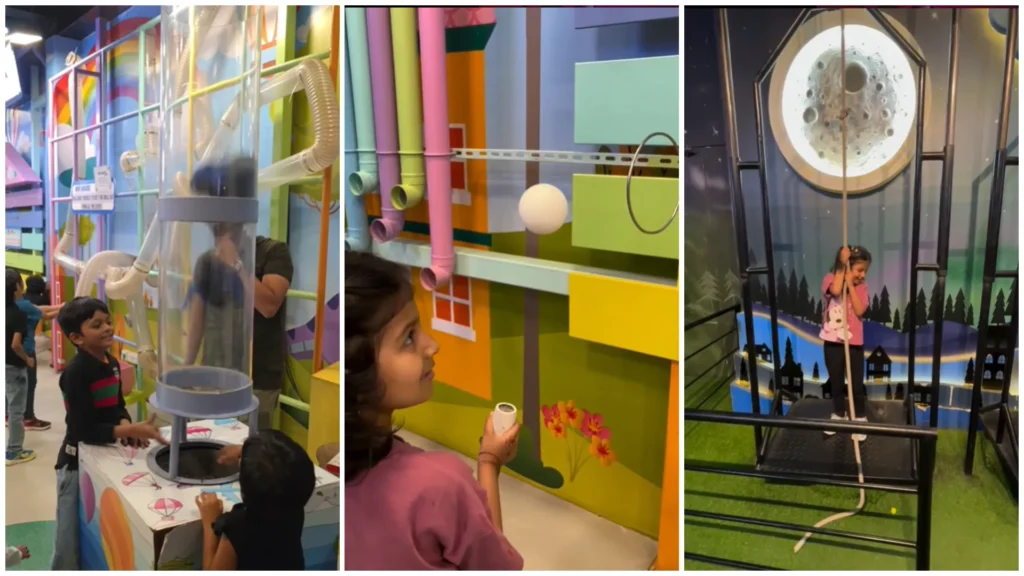
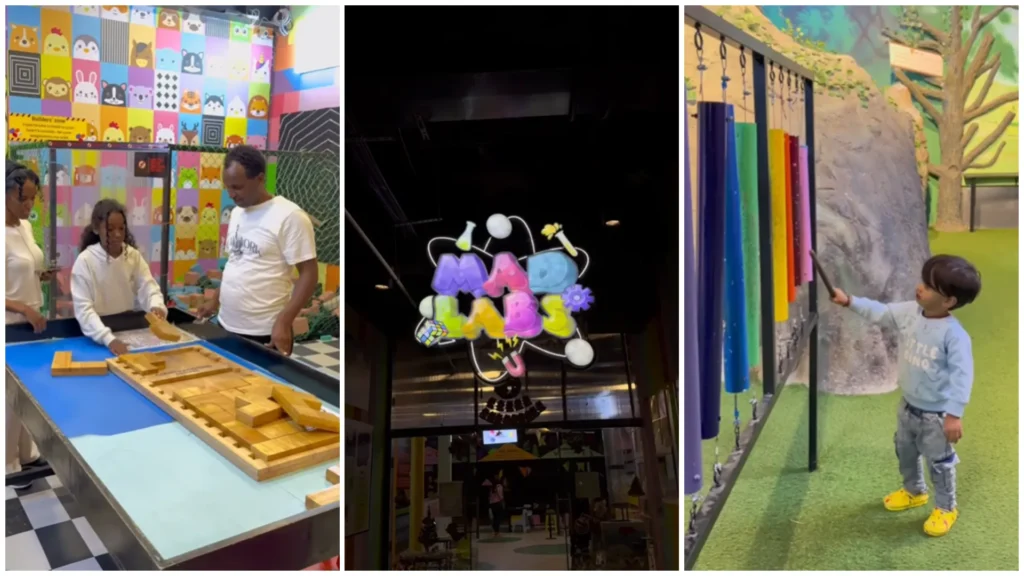
That’s why families in Bangalore are increasingly turning to experiential learning spaces like MAD Labs, located inside Snow City on Jayamahal Main Road. Designed by IISc PhD scientists, MAD Labs offers structured, hands-on learning games that feel like play – but deliver real developmental outcomes.
This guide breaks down how educational learning games work, which age groups benefit most, and why hands-on STEM-based play is one of the smartest investments parents and schools can make.
Best Educational Learning Games for Kids Aged 5–8
The ages of 5 to 8 represent a critical developmental window. During this stage, children rapidly build language skills, logical reasoning, motor coordination, and curiosity-driven learning habits. Choosing the best educational learning games for kids aged 5-8 means matching play to these milestones.
Key Cognitive Skills Developing at This Age
- Pattern recognition
- Early numeracy and literacy
- Cause-and-effect understanding
- Fine motor control
- Attention span and persistence
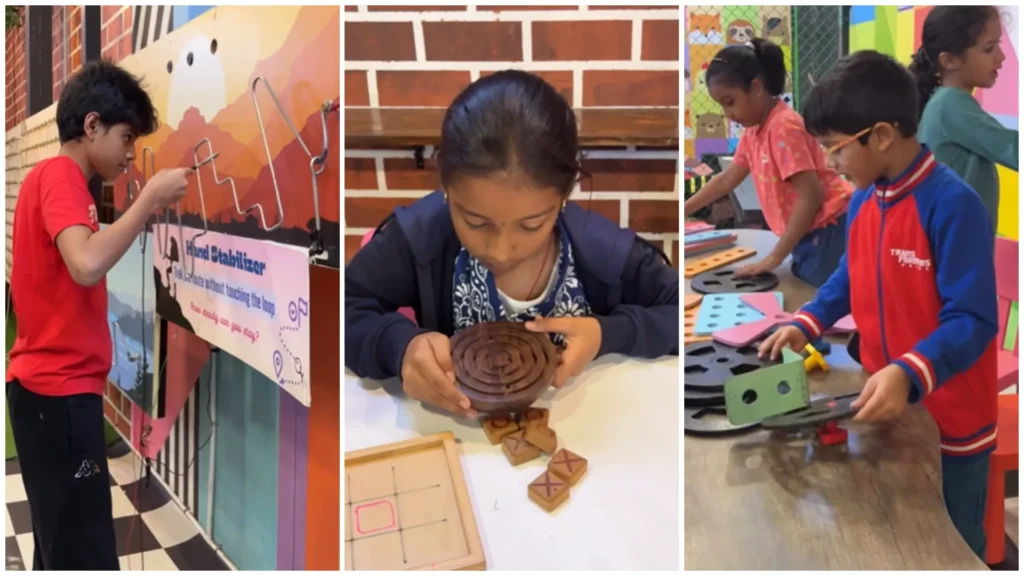
Learning Games at MAD Labs for Ages 5–8
- ABC Lab letter games that blend sensory play with early literacy
- Shape-matching puzzles that develop spatial awareness
- Basic cause-and-effect experiments where kids predict outcomes and test ideas
- Interactive problem-solving stations that reward curiosity
These learning games are designed to be open-ended – allowing children to explore at their own pace while still meeting clear learning objectives.
STEM Learning Games for Elementary School – Grades 1–5
As children enter elementary school, learning shifts from basic discovery to concept-building. STEM learning games for elementary school work best when they translate abstract ideas into tangible experiences.
Why STEM-Based Games Matter
STEM-focused games help children:
- Understand real-world systems
- Build logical and analytical thinking
- Develop confidence in problem-solving
- Learn persistence through trial and error
STEM Zones at MAD Labs That Function as Games
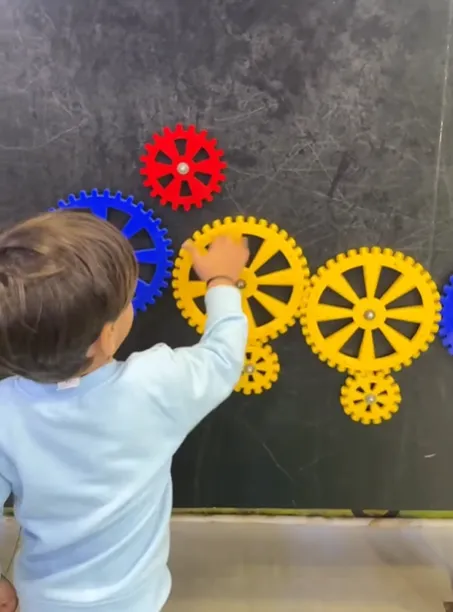
- Tech Mech Lab – Children explore levers, pulleys, gears, and mechanical systems through interactive challenges
- Hydro Lab – Hands-on water experiments demonstrate flow, pressure, and force
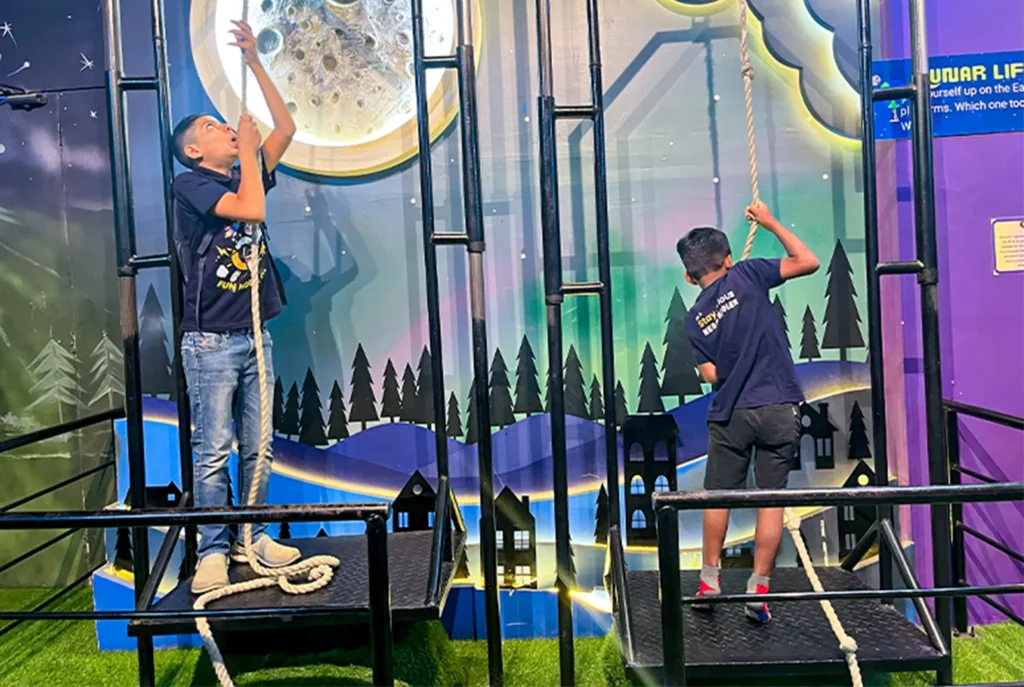
- Space Lab – Gravity, motion, and energy concepts come alive through physical interaction
Rather than instructions or lectures, these STEM learning games rely on experimentation – children learn by doing, adjusting, and discovering patterns themselves.
Hands-On Learning Games for Classroom – Teacher Approved
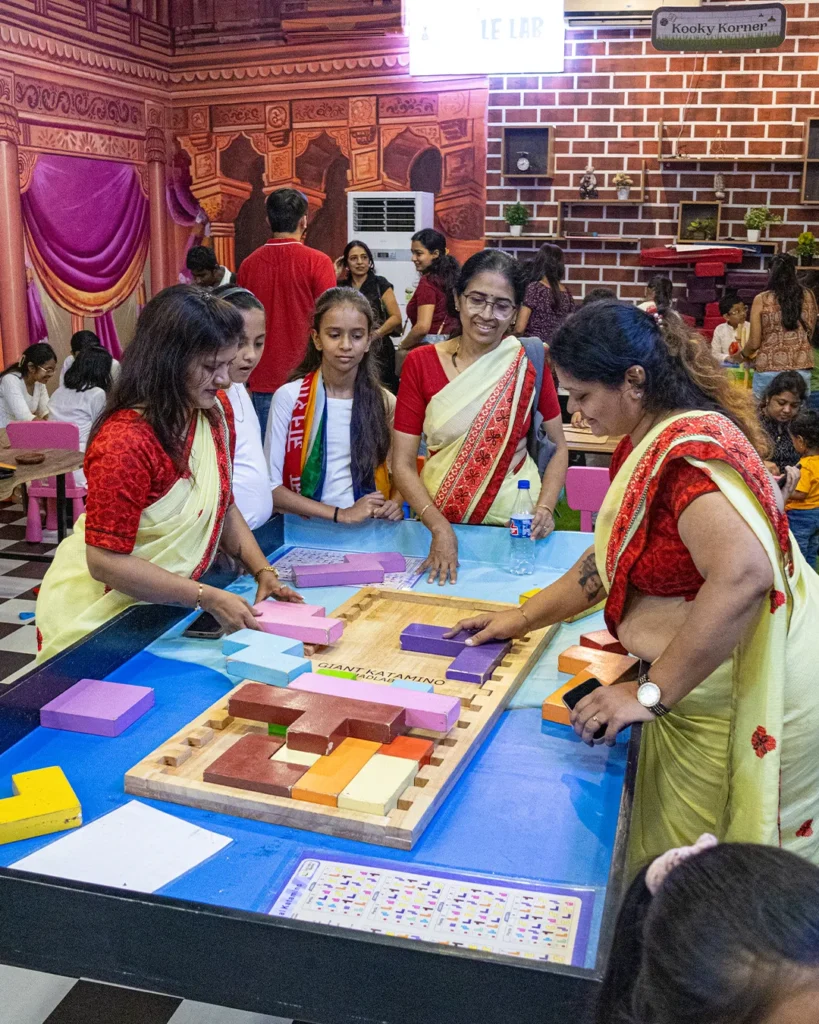
Schools increasingly recognize the value of hands-on learning games for classroom enrichment. These games support group learning, reinforce curriculum concepts, and encourage collaboration.
Why Teachers Prefer Hands-On Learning
Hands-on learning games:
- Increase student engagement
- Improve knowledge retention (up to 75% retention vs. 10% from reading)
- Encourage peer collaboration
- Support diverse learning styles
How MAD Labs Supports Classroom Integration
- Grade-aligned learning objectives for each zone
- Group-friendly activities designed for school visits
- Pre-visit and post-visit discussion prompts
- Safe, supervised environments for large student groups
More than 50+ Bangalore schools use MAD Labs as a supplemental learning destination – integrating experiential games with classroom teaching.
Science Learning Games with Experiments – Real Results
True understanding in science comes from experimentation. Science learning games with experiments allow children to test hypotheses, observe outcomes, and revise thinking.
What Kids Actually Do at MAD Labs
- Conduct safe, guided experiments
- Manipulate real materials – not simulations
- Observe cause-and-effect in real time
- Ask questions and test multiple outcomes
Safety & Outcomes
- All experiments are designed with strict safety standards
- Facilitators guide exploration without giving answers
- Children leave with clearer scientific intuition and confidence
Parents consistently report that children remember these experiences long after the visit – and often recreate experiments at home.
Why Educational Learning Games Beat Screen Time
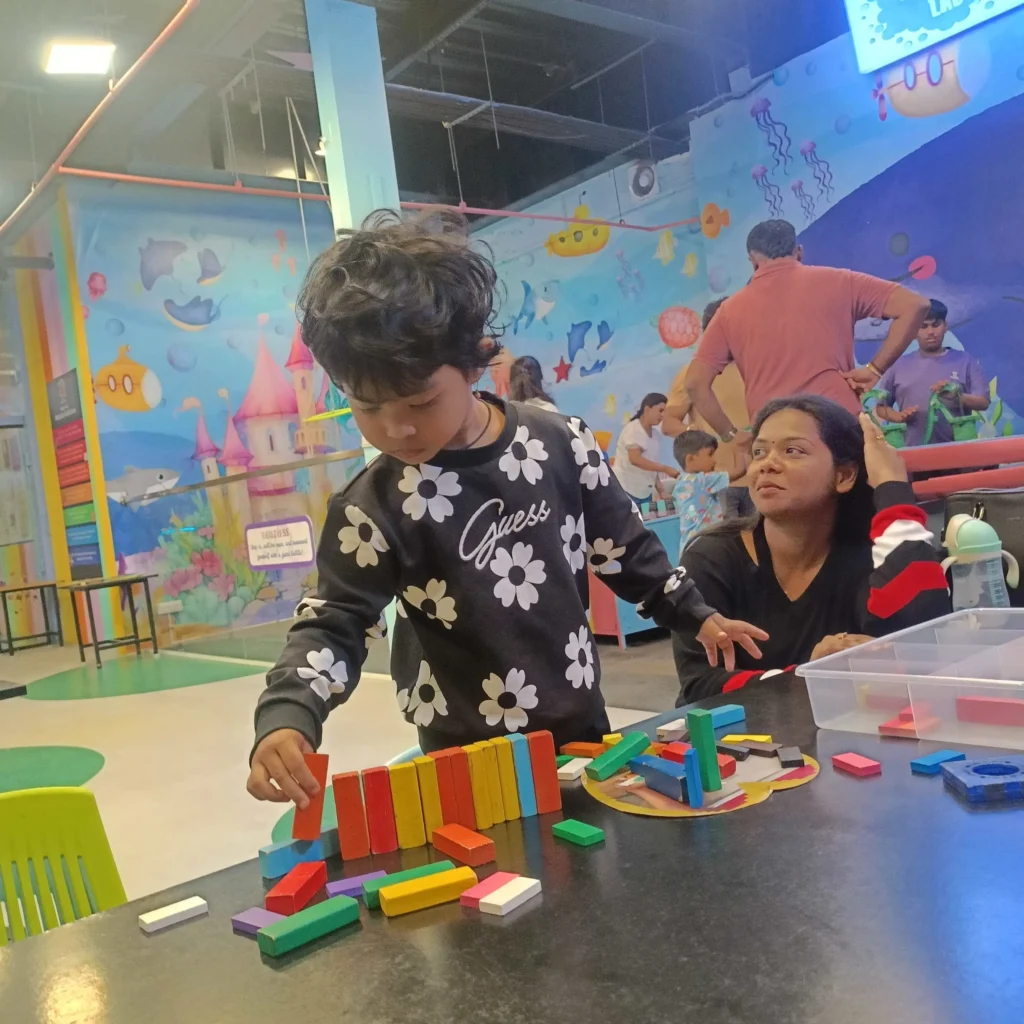
While digital apps are convenient, research shows that interactive learning games with physical engagement deliver far greater developmental benefits.
Hands-On Games vs Screen Apps
| Aspect | Hands-On Learning Games | Screen-Based Apps |
| Retention | High (multi-sensory) | Low to moderate |
| Engagement | Active | Passive |
| Motor Skills | Strong development | Minimal |
| Social Learning | Encouraged | Limited |
Educational learning games that involve movement, touch, and collaboration support long-term skill development and healthier learning habits.
| Frequently Asked Questions 1. What are the best educational learning games for kids aged 5-8? Hands-on games that combine sensory play, problem-solving, and exploration – like those at MAD Labs – work best for this age. 2. Where can I find STEM learning games for elementary school? MAD Labs in Bangalore offers multiple STEM-based interactive learning zones for Grades 1–5. 3. Are there hands-on learning games for classroom use? Yes. Many schools use MAD Labs learning games as part of curriculum enrichment and field trips. 4. How do science learning games benefit children? They build scientific thinking through experimentation, observation, and cause-and-effect learning. 5. What’s the difference between educational games and apps? Educational games involve physical interaction and deeper engagement, while apps are mostly passive. 6. Can educational learning games align with school curriculum? Yes. MAD Labs designs its learning games to align with CBSE and ICSE curricula. |
Choosing the Right Educational Learning Games
The most effective educational learning games combine age-appropriate design, hands-on interaction, and STEM-based exploration. When children can touch, build, and experiment, learning becomes intuitive and lasting.
MAD Labs offers a proven environment for this kind of learning – developed by IISc PhD scientists, trusted by schools, and loved by families.
📍 Location: 1st Floor, Snow City, Jayamahal Main Road, J.C. Nagar, Bengaluru 560006
📞 Book an Educational Visit: 70226 67669
⏰ Open Daily: 10 AM – 8 PM
Explore learning zones, book a visit today.